
By Katya Lyukum
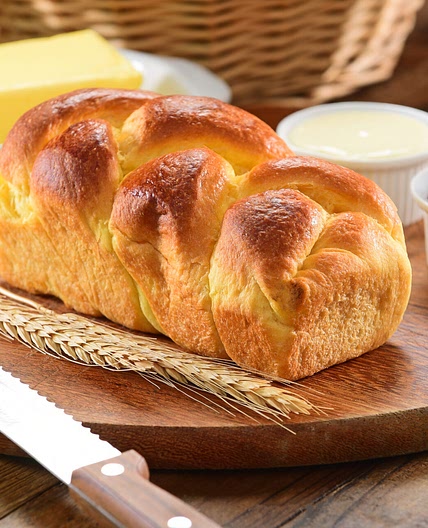
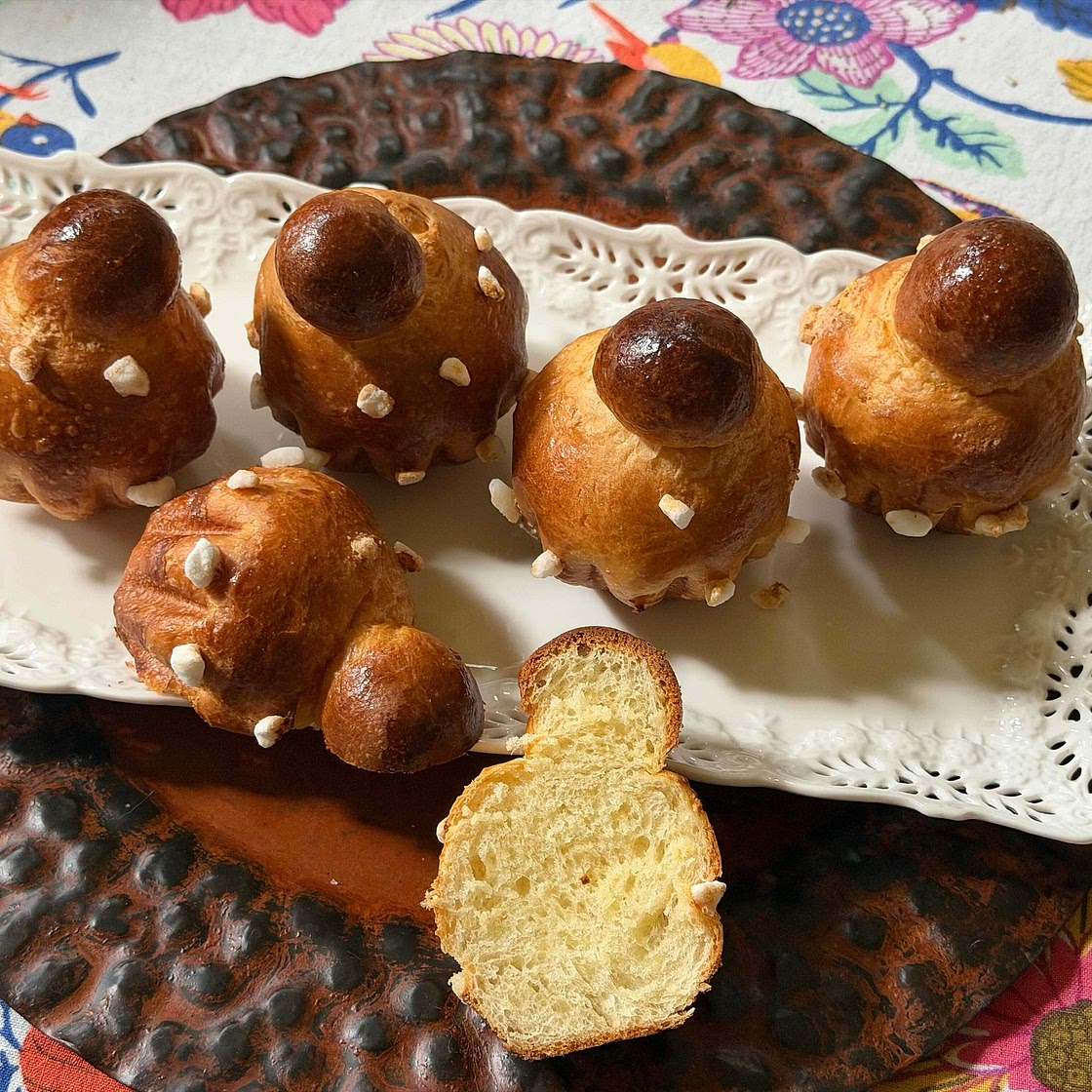
Classic French Brioche | Parisienne aka Brioche à Tête
17 steps
Prep:8h 45min
True brioche is an enriched dough. The secret to the texture is a high butter-to-flour ratio and a cold fermentation (resting the dough in the fridge overnight). Do not skip the overnight chill; it is necessary for the dough to be workable and for the flavor to develop. Yields: 570 g dough — 1 small loaf (1 x 270 g portion of dough) and 6 small Brioche à Tête (6 x 50 g of dough).
Updated at: Thu, 25 Dec 2025 14:51:48 GMT
Nutrition balance score
Unbalanced
Glycemic Index
73
High
Glycemic Load
13
Moderate
Nutrition per serving
Calories180.2 kcal (9%)
Total Fat10.2 g (15%)
Carbs17.9 g (7%)
Sugars2.8 g (3%)
Protein4.2 g (8%)
Sodium18.1 mg (1%)
Fiber0.5 g (2%)
% Daily Values based on a 2,000 calorie diet
Ingredients
12 servings


Instructions
Step 1
In the bowl of a stand mixer fitted with the dough hook, combine the flour, sugar, salt, and yeast.
Step 2
Add the eggs and lukewarm milk.
Step 3
Mix on low speed for about 5 minutes until the dough comes together. It will look shaggy and fairly dry at first. Scrape down the sides if needed.
Step 4
Increase speed to medium-low and knead for another 10–15 minutes. The dough should become smooth and elastic, pulling away cleanly from the sides of the bowl. This strengthens the gluten before the fat is added.
Step 5
With the mixer running on low, begin adding the softened butter one chunk at a time. Wait until each chunk is almost absorbed before adding the next. This can take 10–15 minutes.
Step 6
Once all butter is added, increase speed to medium and mix for another 5–10 minutes.
Step 7
The Windowpane Test: Stop the mixer and stretch a piece of dough. It should be very shiny, silky, and stretch so thin you can see light through it without it tearing. It will be very soft and sticky—do not add more flour.
Step 8
Cover the bowl with plastic wrap and let it rise at room temperature for about 1 hour (it should puff up but not necessarily double).
Step 9
Punch the dough down to release the gas. Re-cover tightly and place the bowl in the refrigerator overnight (at least 8 hours, up to 24 hours). The butter will harden, making the dough firm and easy to shape the next day.
Step 10
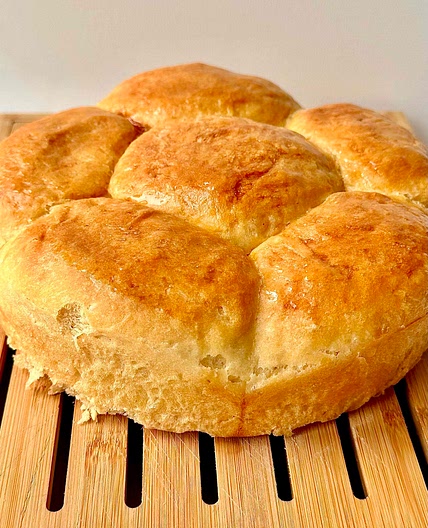
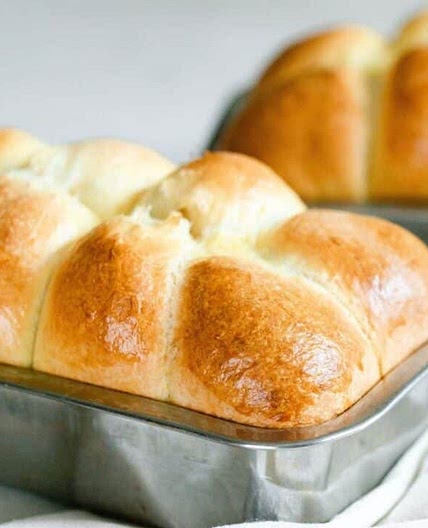
For a Loaf (Nanterre): Grease a loaf pan. Divide 270 g of dough into 6 equal pieces, 45 g each. Roll them into tight balls. Place them side-by-side in the pan (2 rows of 3).
Step 11
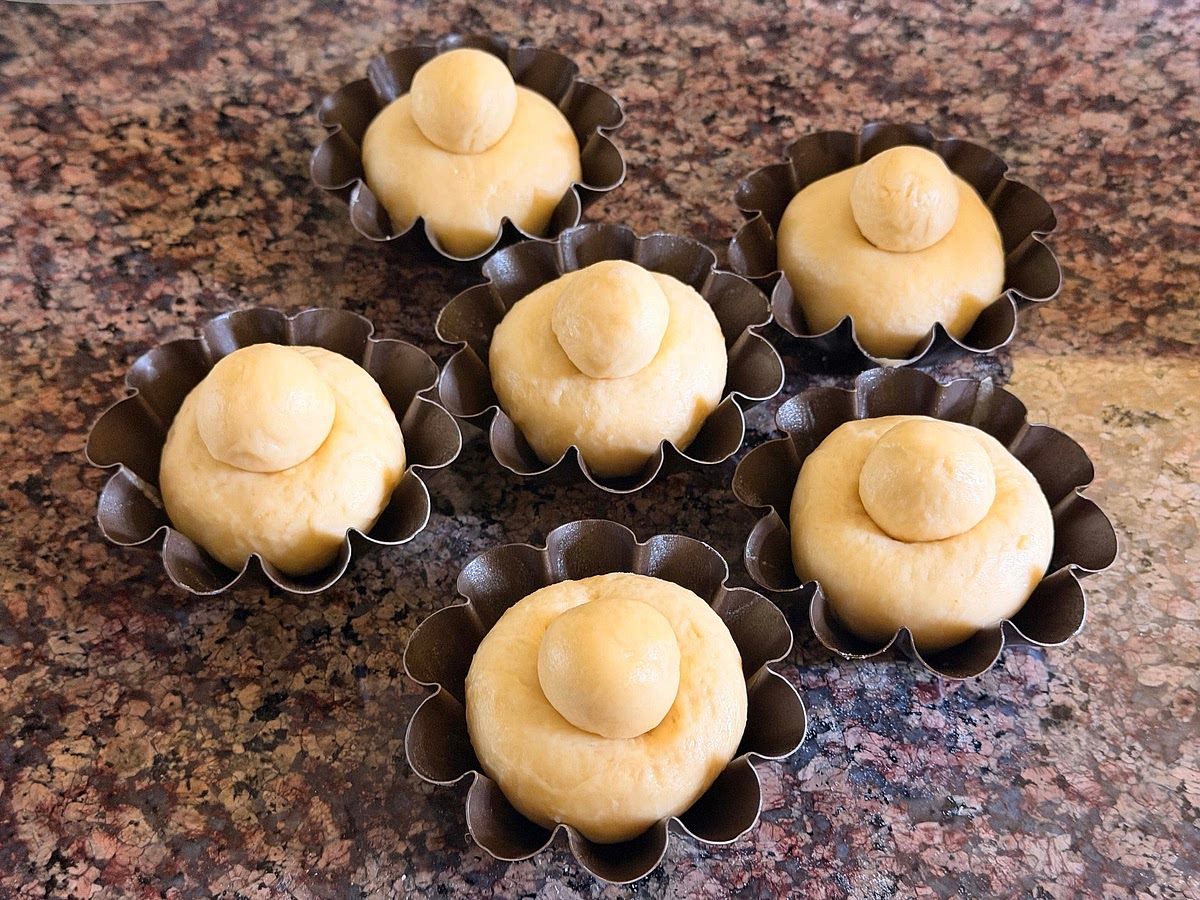
For 6 small Brioche à Tête, 300g of the dough, 6 x 50g portions: Grease fluted brioche tins. Roll a larger ball for the base and place it in the tin. Using your fingers, make a deep indentation in the center of the base. Roll a smaller pear-shaped ball and fit the pointed end into the indentation to form the "head."
Step 12
Cover the shaped dough loosely with greased plastic wrap. Let it proof in a warm, draft-free spot for 1.5 to 2 hours. It is ready when it looks very puffy and wobbles like Jell-O when you gently shake the pan.
Step 13
Preheat oven to 350°F.
Step 14
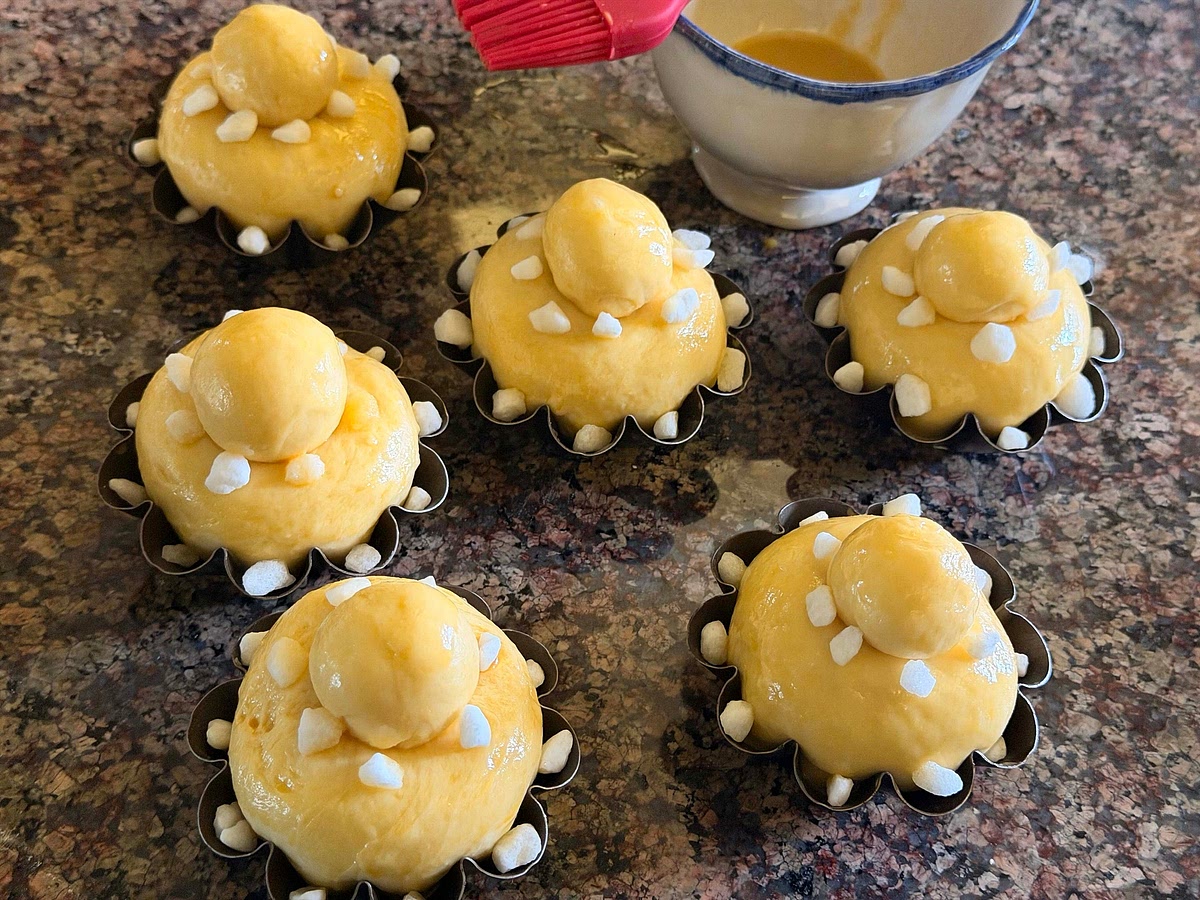
Brush the top gently with the egg wash (try not to let the egg drip down the sides, or the bread will stick to the pan).
Step 15
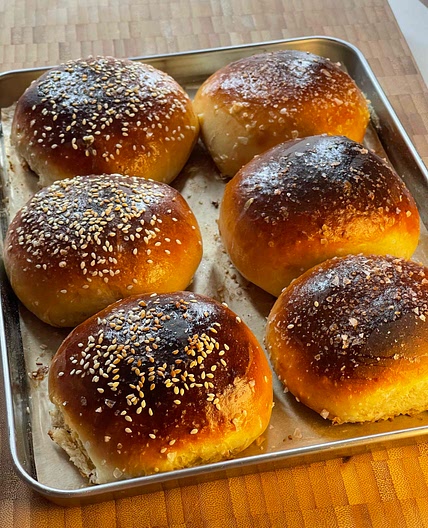
Bake small buns for 15–20 minutes, small loaf — for 20-25 minutes. If the top gets dark too quickly (mahogany is good, burnt is not), tent it loosely with aluminum foil after 10 minutes.
Step 16
The internal temperature should reach 190°F (88°C).
Step 17
Let it cool in the pan for 10 minutes, then transfer to a wire rack. Brioche is delicate; if you slice it while hot, the crumb may mash together. Wait until it is completely cool.
Notes
0 liked
1 disliked
There are no notes yet. Be the first to share your experience!