1/6
2/6
3/6
4/6
5/6
6/6
100%
1

Nutrition balance score
Great
Glycemic Index
73
High
Glycemic Load
19
Moderate
Nutrition per serving
Calories120.7 kcal (6%)
Total Fat0.5 g (1%)
Carbs25.4 g (10%)
Sugars0.5 g (1%)
Protein3.7 g (7%)
Sodium244.9 mg (12%)
Fiber2.9 g (10%)
% Daily Values based on a 2,000 calorie diet
Ingredients
16 servings


Instructions
Step 1
Day before: feed sourdough and let it sit 8 hours on the counter.
Step 2
Autolyse— 60 min
Daca incep la 15:00, pe 21:00 as putea pune aluatul in frigider. Mix 250 g white, 200 g wholemeal, 50 g rye, 200 g water
until fully hydrated and leave covered for 1 hour.
Step 3
Add 50 g starter, 175 g kefir, 10 g salt and mix thoroughly. If the dough seems too loose, don't add anything else; if it seems surprisingly stiff, you can adjust with a little water. At first it may feel messy and slippery because you're introducing quite a lot of liquid at once. That's normal.
Use pinching, folding and squeezing rather than vigorous kneading. You want everything evenly incorporated and the dough beginning to become cohesive. Once everything is incorporated, oil a yena tray and transfer dough in it. Cover and begin bulk fermentation by covering and letting it sit 30 minutes.
Step 4
After 30 minutes
Lightly oil hands and do one fairly thorough stretch-and-fold.Take one side of the dough, stretch it upward until you feel resistance, then fold it over itself. Rotate the bowl and repeat 3–4 times. After another 30 minutes
Repeat, but a little more gently. After another 30 minutes
Do one final gentle fold. After that, leave the dough alone. This is important for your crumb. We're trying to build enough gluten strength to retain gas while avoiding repeatedly knocking the developing bubbles out of the dough.
Step 5
Bulk fermentation: This is the most important stage.
Cover the bowl. Leave it on your counter for 2-4 hours. Your starter will use this time to kickstart fermentation. Don't use the clock as your primary indicator.
Don't wait for it to double.
Instead, aim for approximately 50–70% expansion. You're looking for:
noticeable volume increase
bubbles visible around the sides/bottom
a somewhat domed surface
a light, aerated appearance
a gentle jiggle when you move the bowl
dough that feels noticeably less dense
The dough should look alive, rather than simply larger. Why not double? Because you're going to give it another long fermentation overnight. If you push bulk too far, you can end up with a beautifully fermented dough that collapses during shaping or produces a flatter, tighter crumb after the overnight proof. With wholemeal + rye + kefir combination, a slightly under-ferment bulk is preferable, then let the refrigerator finish the job.
Step 6
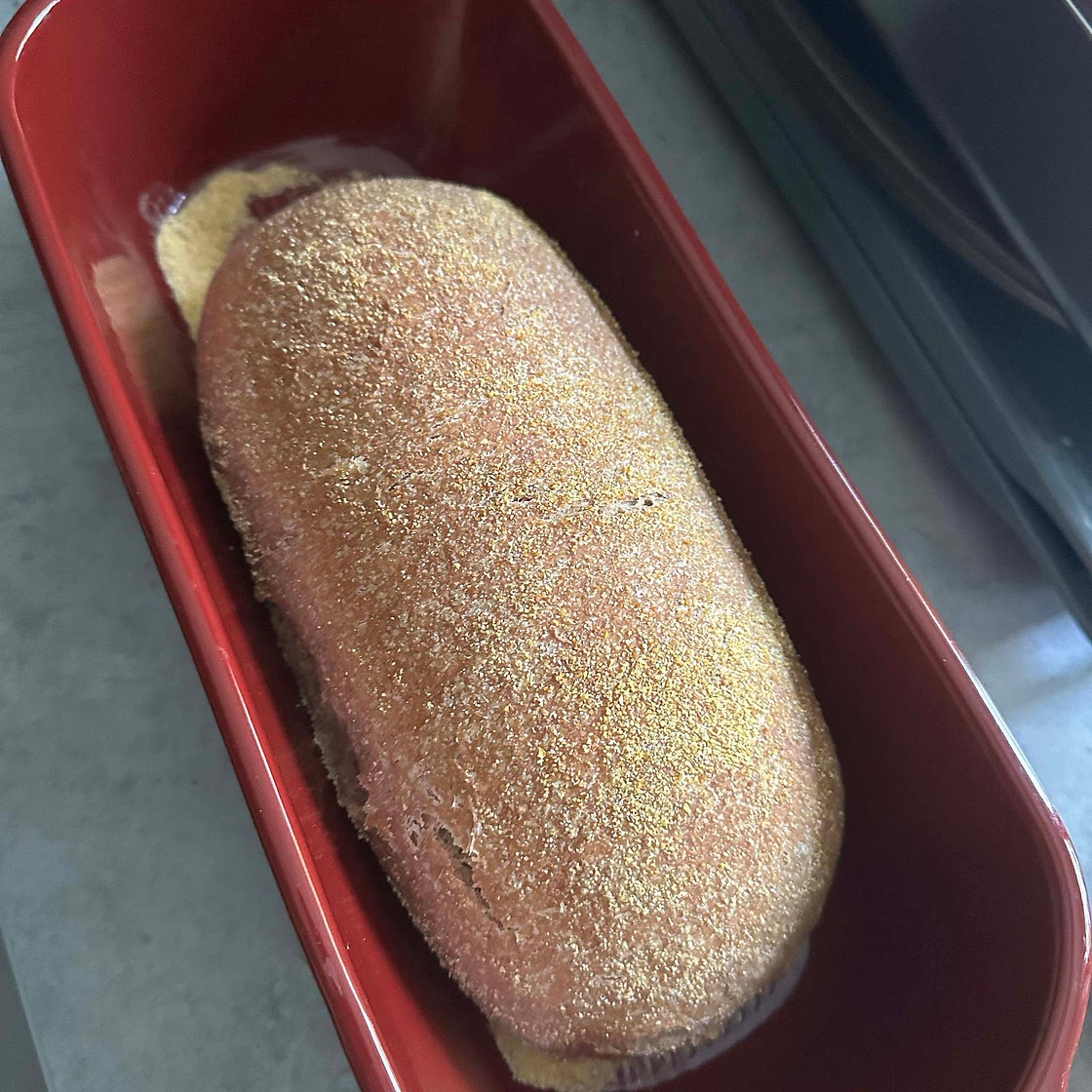
Shape and Sleep: Gently shape the dough into a smooth log (batard). Place it directly into your parchment-lined Emile Henry baker. Put the ceramic lid on and place the whole baker into the fridge overnight (12-18 hours).
Step 7
DAY 2: Bake in the morning
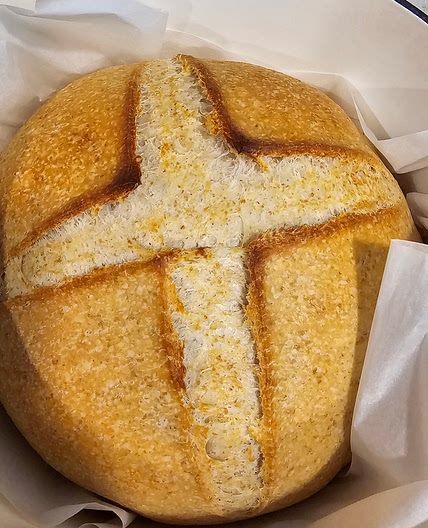
SCORE the dough and then place the covered Emile Henry into the cold oven. Set the oven to 250°C and bake covered for 30 minutes.
Step 8
Reduce temperature to 210°C then Remove the lid.
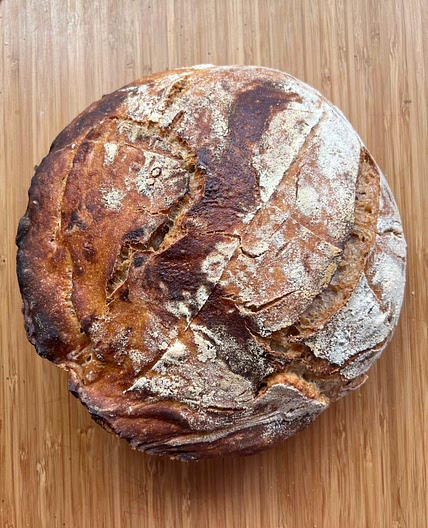
Continue baking Uncovered for 15 minutes. You want the crust nicely golden/brown, but don't chase a very dark crust. The longer you bake uncovered, the thicker and harder that crust becomes.
Step 9
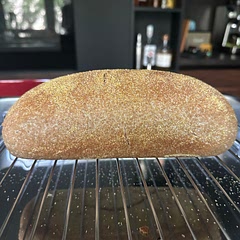
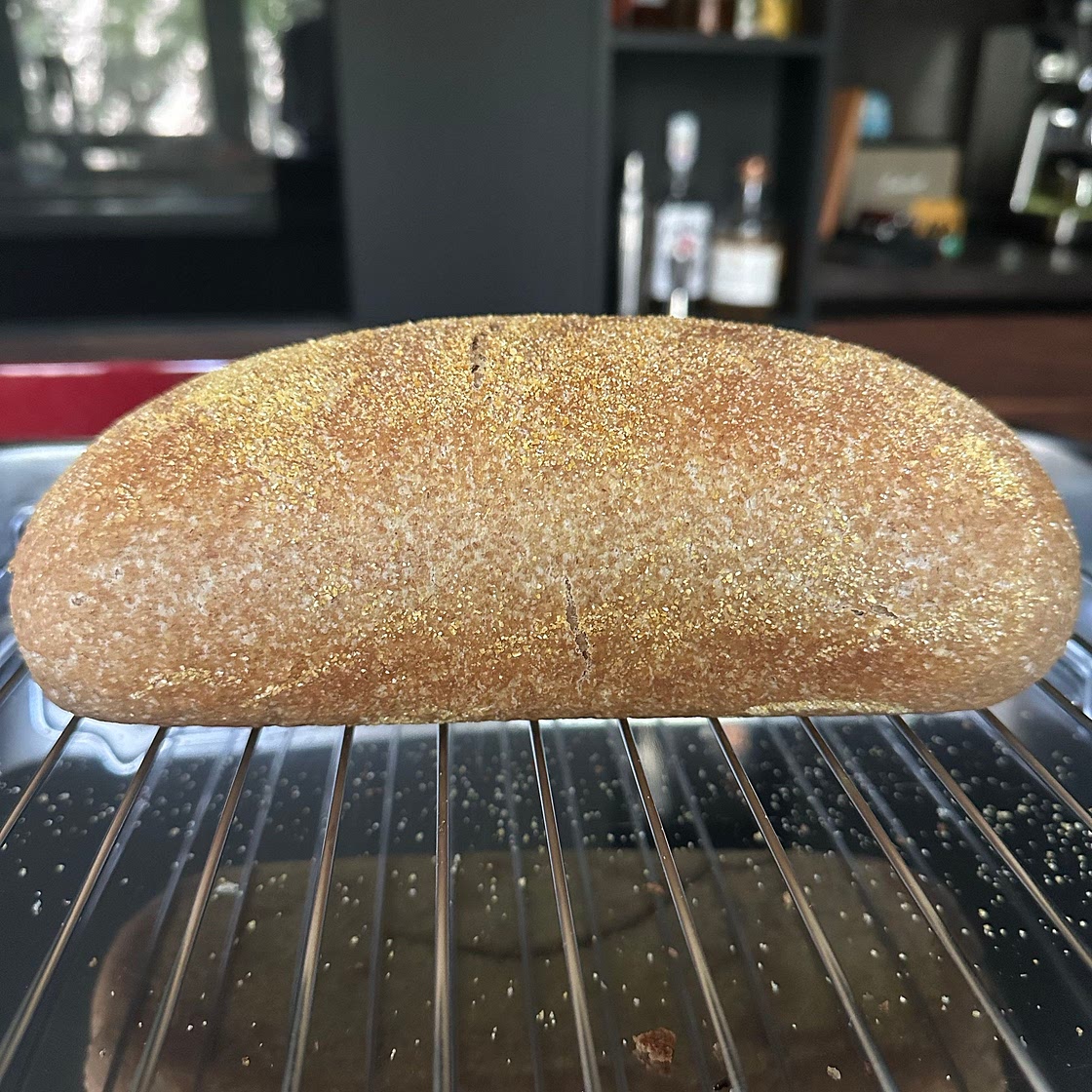
Once it's baked, immediately remove the loaf from the Emile Henry and put it on a wire rack. Don't leave it sitting in the hot ceramic. Let it cool completely before cutting.