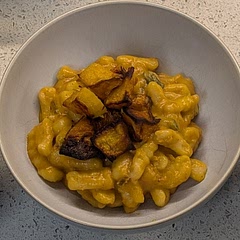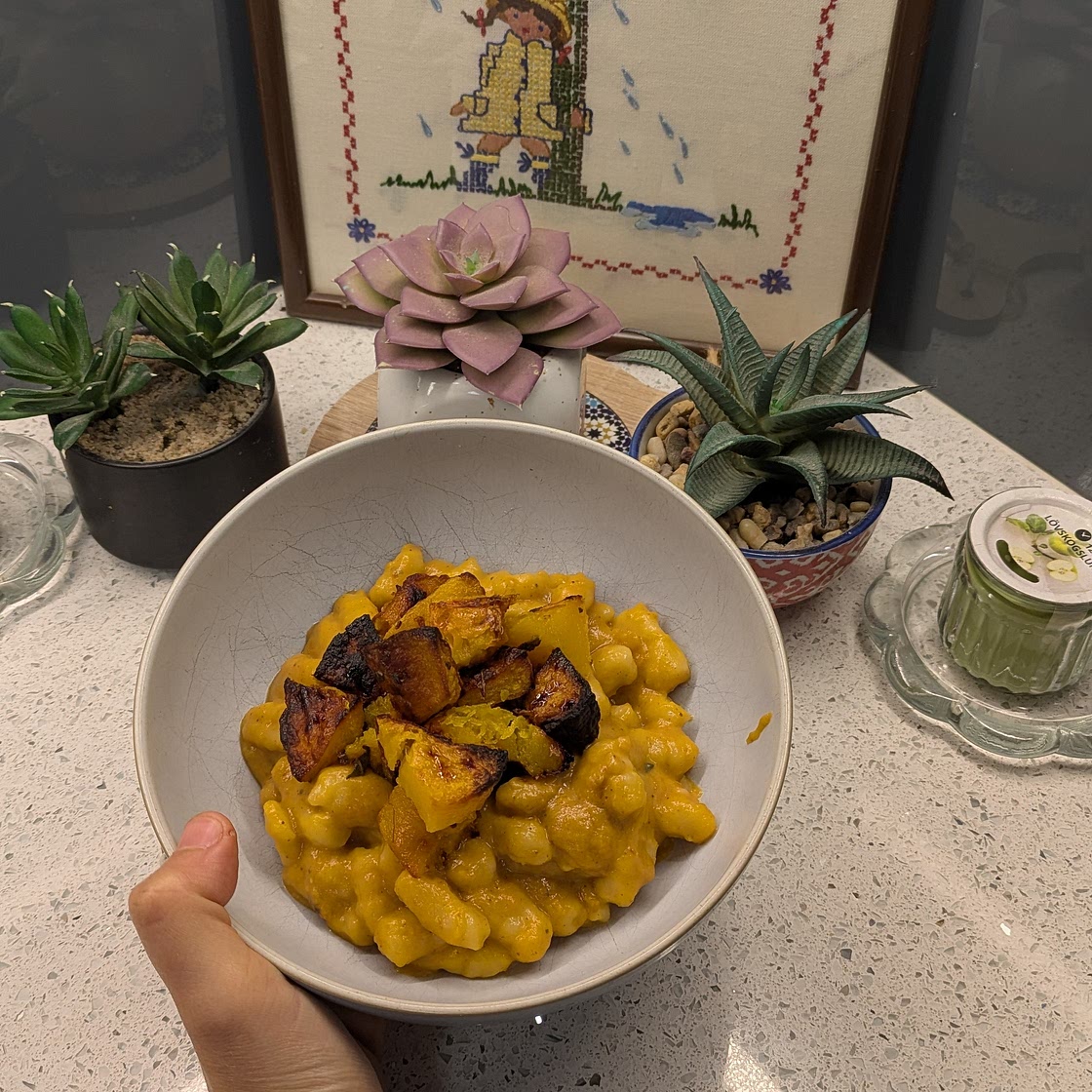
1/2
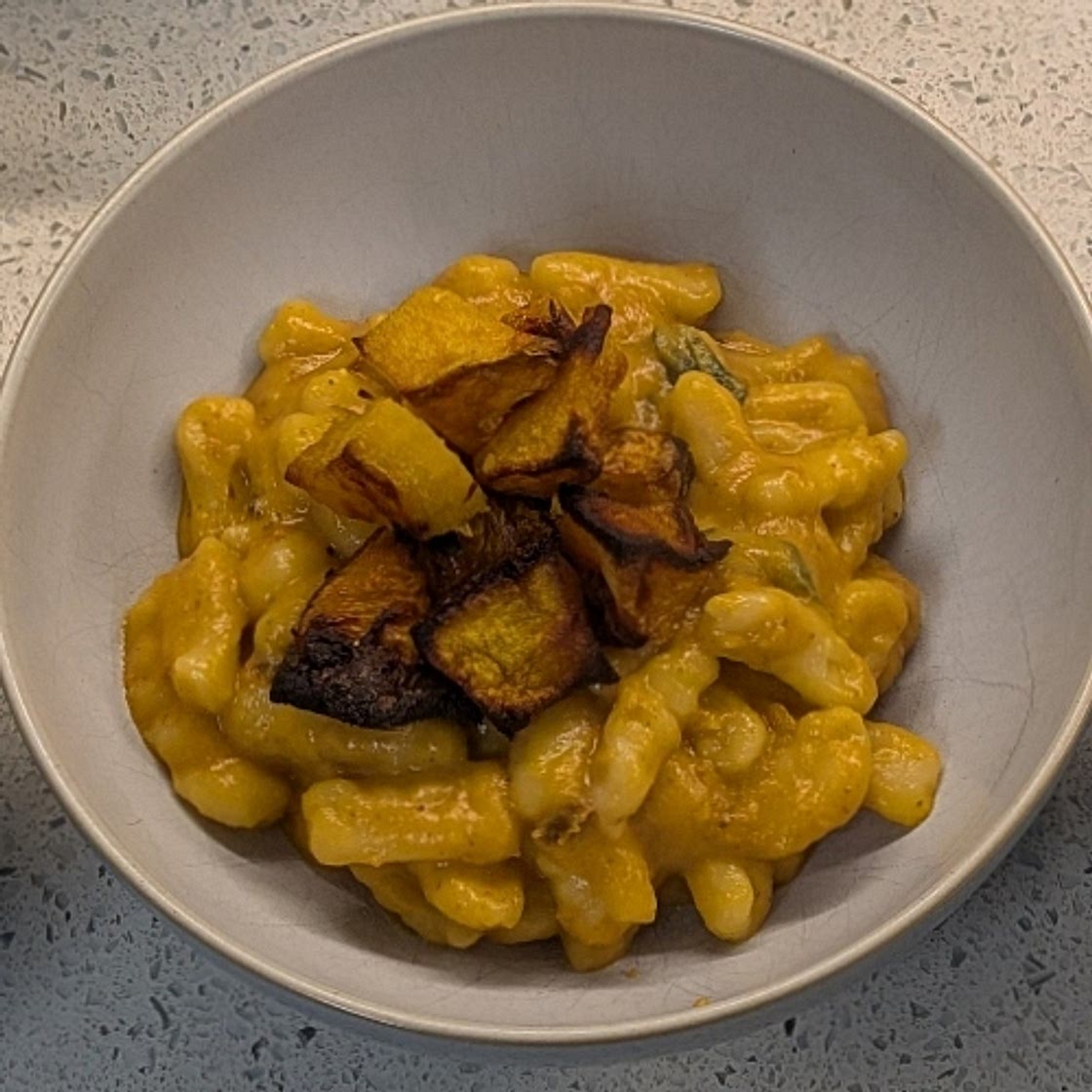
2/2
100%
1

By leah gorb
Hand-Rolled Squash & Sage Cavatelli
Makes three portions
Updated at: Tue, 06 Oct 2026 20:37:39 GMT
Nutrition balance score
Good
Glycemic Index
44
Low
Nutrition per recipe
Calories2320.9 kcal (116%)
Total Fat98.1 g (140%)
Carbs295.1 g (114%)
Sugars2.6 g (3%)
Protein72.1 g (144%)
Sodium4059.4 mg (203%)
Fiber25.2 g (90%)
% Daily Values based on a 2,000 calorie diet
Ingredients
0 servings
Pasta


Squash and Puree

1squash

olive oil

salt

2garlic cloves

6sage leaves

75mlstock

30 gramsparmesan

Lemon
Grated, little

1 Tbspyoghurt
or cottage chee

Nutmeg
or similar
Brown Butter


Instructions
Step 1
Make the pasta dough Put the 300 g semolina into a large bowl. Dissolve the 6 g salt in 150 g warm water. Pour most of the water into the semolina and mix with your fingers until shaggy. Start squeezing and kneading it together. If there are lots of dry crumbs that refuse to join the dough, add the remaining water a teaspoon at a time. You may not need all 165 g. Turn the dough onto the counter and knead for 8–10 minutes. The finished dough should feel firm, smooth and slightly springy — noticeably firmer than bread dough. Wrap tightly and rest for 30–45 minutes at room temperature.
Step 2
2. Roast the squash Heat the oven to 210°C conventional / 190°C fan. Peel and deseed the squash if necessary. Cut roughly three-quarters into large chunks or wedges. Cut the remaining quarter into neat 1–1.5 cm cubes. Keep the two sizes separate. Toss the large pieces with olive oil, salt, the 2 lightly crushed garlic cloves and 6 sage leaves. Roast for 35–45 minutes, until completely tender and deeply caramelised at the edges. On a separate tray, toss the squash cubes with olive oil and salt. Roast for 20–30 minutes, turning once, until golden but still holding their shape. Set the cubes aside.
Step 3
Make the squash purée Measure approximately 325 g of the soft roasted squash flesh. Put it into a blender with: 75 ml hot stock 30 g Parmigiano 1 tbsp crème fraîche ¾ tsp white wine vinegar Tiny pinch of nutmeg Blend until extremely smooth. Taste and adjust the seasoning. It should taste intense and savoury rather than simply sweet. Add salt if needed. If it feels heavy, add another few drops of vinegar. The consistency should resemble a thick, silky soup, rather than mashed squash. Set aside.
Step 4
Shape the cavatelli Unwrap the rested pasta dough. Cut off a small portion and keep the remaining dough covered so it doesn't dry out. Roll the piece into a rope roughly 1 cm thick. Cut the rope into pieces approximately 1–1.5 cm long. Take each piece and press it against the tines of a fork with your thumb. Push down and drag the dough towards yourself. The dough should curl around your thumb, creating a hollow shell with ridges on the outside. Don't worry about making every piece identical — a slightly rustic appearance is part of the charm. Transfer the finished cavatelli to a tray generously dusted with semolina. Repeat with the remaining dough.
Step 5
Prepare the brown butter and crispy sage Bring a large pot of well-salted water to the boil. Meanwhile, put the 75 g butter into a large sauté pan over medium heat. Allow it to melt, foam and begin turning golden. Once the milk solids have turned hazelnut brown and the butter smells nutty, add the 12–15 sage leaves. They should crisp rapidly. After around 20–30 seconds, remove roughly half the sage leaves and place them on kitchen paper. These will be used for plating. Keep the remaining sage and brown butter in the pan. Be careful not to burn the butter.
Step 6
Build the sauce Turn the heat under the brown butter to low. Add approximately 225–250 g of the squash purée. Whisk it into the brown butter. Add about 50 ml pasta water and whisk again. The sauce may look slightly loose at this stage — that's exactly what you want. The pasta and cheese will thicken it later. Keep warm over very low heat.
Step 7
Cook the cavatelli Drop the fresh cavatelli into the boiling salted water. Stir gently so they don't stick. Cook for approximately 3–5 minutes, depending on their thickness. Taste one to check. They should be pleasantly chewy with no raw, floury centre. Before draining, reserve at least 200 ml pasta water.
Step 8
Finish the pasta in the sauce Using a spider or slotted spoon, transfer the cavatelli directly into the squash sauce. Turn the heat to medium. Add approximately 50 ml pasta water and toss or stir vigorously. Gradually add the 40 g Parmigiano. Continue tossing until the sauce becomes glossy and coats the pasta, rather than sitting heavily around it. Add more pasta water, a tablespoon at a time, if necessary. Fold in most of the roasted squash cubes, keeping a few of the best-looking pieces for plating. Finish with the zest of ½ lemon and 1 tsp lemon juice. Taste. Because squash and brown butter are both naturally sweet and rich, the dish will usually benefit from slightly more acidity and salt than you might initially expect. Add another little squeeze of lemon if it needs lifting.