
By Axel Azzopardi Arena
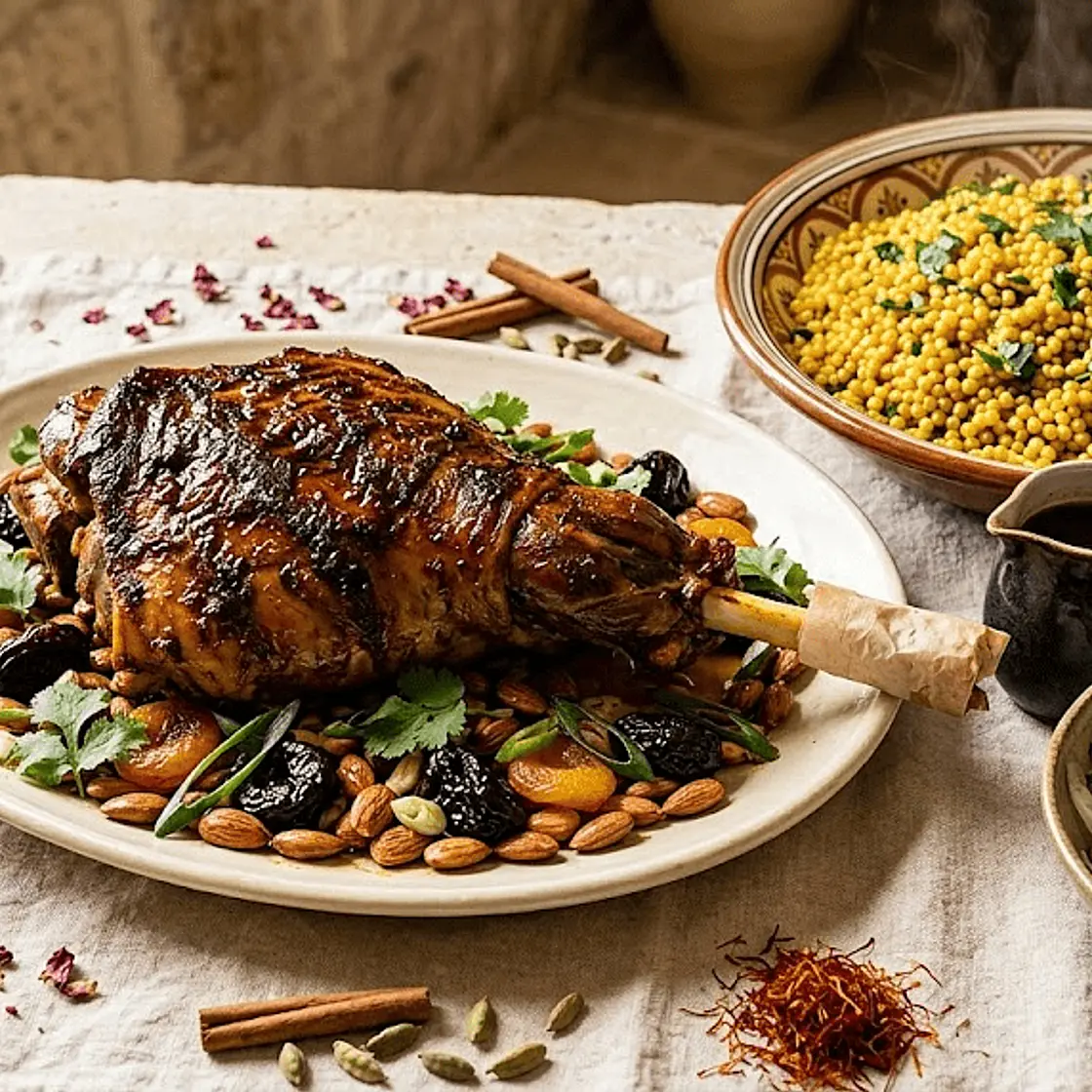
Mediterranean-Moroccan Lamb Leg
40 steps
Cook:5h
The best make-ahead strategy: braise completely the day before, refrigerate overnight in the braising liquid (which bastes the meat as it cools), then re-blast at 230°C for 20 minutes. The rest is actually better after an overnight rest — the spices deepen and the fruit sweetness integrates.
Serving Suggestion
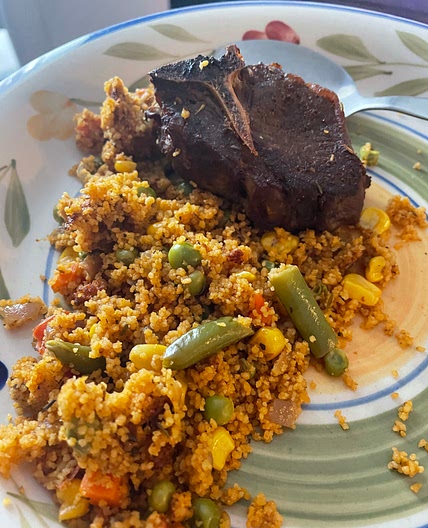
Serve with saffron-scented couscous tossed with preserved lemon and herbs, or a classic Maltese roasted potato traybake (patata l-forn) — the rendered lamb fat dripped into the potatoes during braising is extraordinary. A simple salad of shaved fennel, orange, and black olives cuts the richness beautifully.
Updated at: Tue, 31 Mar 2026 10:41:32 GMT
Nutrition balance score
Good
Glycemic Index
22
Low
Glycemic Load
10
Low
Nutrition per serving
Calories1254.3 kcal (63%)
Total Fat70.7 g (101%)
Carbs43.7 g (17%)
Sugars19.2 g (21%)
Protein98.2 g (196%)
Sodium3639.7 mg (182%)
Fiber8 g (28%)
% Daily Values based on a 2,000 calorie diet
Ingredients
5 servings
The Lamb

Marinade Paste

2 ½ Tbspras el hanout

½ tspsmoked paprika

1 tsphoney

6 clovesgarlic
microplaned or very finely minced

25gfresh ginger
microplaned

1lemon
Zest of
3 Tbspfresh lemon juice

4 Tbspextra-virgin olive oil

1 ½ tspfine sea salt

½ tspblack pepper
freshly cracked
Braising Base

2white onions
medium, roughly sliced

3 stalksscallion
white + light green part

2anchovy fillets in oil
Maltese inċova if you can find them

10dried apricots
halved

10prunes
pitted

1stick cinnamon

2bay leaves

400mllamb stock

100mldry white wine
optional but excellent a Maltese Għargħur or Chenin Blanc
Finishing

50gblanched whole almonds
toasted in a dry pan until golden

fresh cilantro
roughly torn
3scallions
dark green tops only, finely sliced on the bias
1 Tbspextra-virgin olive oil

Flaky sea salt
Maldon or Sicilian
Home Made Ras el Hanout

1 Tbspcumin seeds

1 Tbspcoriander seeds

1 tspfennel seeds
1 tspblack peppercorns

6green cardamom pods
crack them open, use seeds only

4allspice berries

4whole cloves
1cinnamon stick
small, a 5cm piece

½ tspdried red chilli flakes
whole, or 1 small dried bird's eye

1 tspground turmeric
no whole version — this is fine

½ tspground ginger
you're using fresh ginger in the recipe, so keep this light

¼ tspnutmeg
freshly grated, grate right at the end — nutmeg loses aroma in minutes once grated
½ tspsweet smoked paprika
already ground — just add after toasting

1 tspdried rose petals
Optional but exceptional, floral, unmistakably Moroccan, and beautiful against the Maltese lemon
Instructions
Day Before - The Marinade (30 min active, 12–24 hrs passive)
Step 1
Using a sharp paring knife, cut 20 deep slits (4–5cm deep, angled toward the bone) all over the lamb leg. Go deep — this is how ras el hanout reaches the interior
Step 2
Combine all marinade paste ingredients in a bowl and mix to a thick, cohesive paste
Step 3
Rub aggressively all over the lamb, forcing paste deep into every slit with your fingers
Step 4
Place in a large zip-lock bag or covered dish; refrigerate 12–24 hours minimum. Overnight is the non-negotiable floor here — anything less and the spice profile stays superficial
1 Hour Before Cooking
Step 5
Remove lamb from fridge 1 hour before cooking — this ensures even cooking from surface to bone
Step 6
Preheat oven to 230°C (446°F) fan / 250°C conventional
Step 1 - Initial Sear (20 min)
Step 7
Place lamb directly on oven rack (or in a heavy roasting pan) at the highest position
Step 8
Roast uncovered at 230°C for 18–20 minutes until the exterior is deeply browned and the spice paste is caramelised and fragrant
Step 9
Pro tip: Don't open the oven door for the first 15 minutes — you need constant high heat to set the crust
Build the Braising Base
Step 10
While the lamb sears, scatter sliced onions, scallion stalks, anchovies, apricots, prunes, cinnamon stick, and bay leaves into a deep, heavy-lidded roasting dish (a Le Creuset or similar)
Step 11
Pour in the stock + wine; the liquid should sit about 2cm deep
Step 12
When the lamb has finished its initial sear, lower it into the braising dish over the aromatics
Step 13
Pro tip: The lamb should not be submerged — it roasts above the liquid, not boils in it. Add a splash more stock if needed to maintain 2cm depth
The Low Slow Braise (3.5–4 hrs)
Step 14
Reduce oven to 150°C (302°F) fan
Step 15
Cover the roasting dish very tightly with a double layer of foil + the lid if you have one. No steam must escape
Step 16
Braise for 3.5 hours for a 2.3kg leg
Step 17
At the 2-hour mark, open and baste the lamb with braising juices; check liquid level — top up with ¼ cup stock if needed
Step 18
At 3.5 hours, test with a probe thermometer — internal temp at the thickest non-bone point should be 88–92°C (190–198°F); alternatively, a skewer should pierce with zero resistance
Step 19
Pro tip: Resist lifting the foil more than twice. Every peek drops the oven 10–15°C and extends cooking time
Final Lacquering Blast (15 min)
Step 20
Remove the lamb from the braising dish; set aside on a rack
Step 21
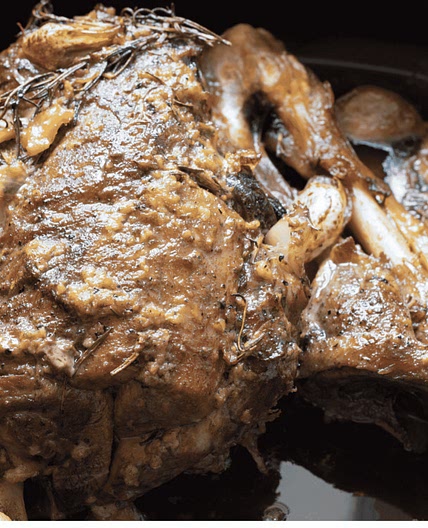
Raise oven to 230°C and return lamb uncovered for 12–15 minutes until the crust is re-crisped, deeply bronzed, and sticky
Step 22
Pro tip: Baste once with braising juices at 7 minutes for a gloss layer
The Jus (20 min)
Step 23
While the lamb blasts, strain the braising liquid into a small saucepan, pressing solids. Keep the softened apricots and prunes separate for serving
Step 24
Skim fat, then reduce at a rolling simmer until the jus coats the back of a spoon (approx. 15 min). You want roughly 150–200ml of deeply flavoured, glossy jus
Step 25
Finish with 1 tbsp cold olive oil whisked in off-heat for body and sheen. Adjust seasoning with lemon juice and salt
Resting, Carving & Serving
Step 26
Rest the lamb uncovered on a board for 25–30 minutes — non-negotiable. Internal temp will climb another 3–4°C and juices redistribute throughout the muscle
Step 27
Do not tent with foil during rest — it steams and softens the crust you worked for
Step 28
Carve by running a knife along the bone, then slicing the large muscle groups into thick, generous slices (not wafer thin — this is Easter lamb, not Sunday deli)
Step 29
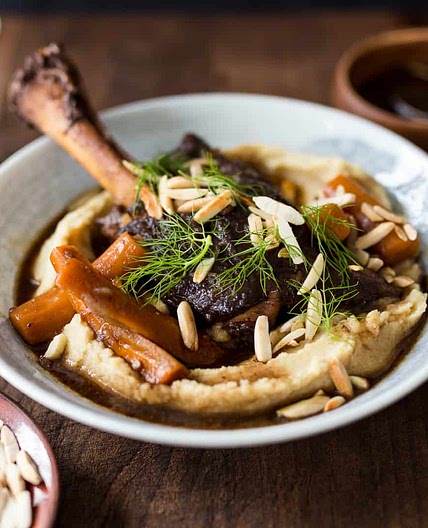
Scatter the plate with toasted almonds, torn cilantro, sliced scallion greens, and the reserved softened apricots and prunes around the meat
Step 30
Pour jus at the table (never drown the meat — serve in a warm jug)
Step 31
Finish with a pinch of flaky sea salt over the carved meat
Home Made Ras el Hanout
Step 32
Place a dry, heavy skillet (cast iron ideal) over medium-low heat — no oil, no shortcuts
Step 33
Add the whole seeds first: cumin, coriander, fennel, peppercorns, allspice berries, cloves, and the cardamom seeds from their pods
Step 34
Toast stirring continuously for 2–3 minutes — you're looking for the first wisps of fragrant smoke and a very slight colour darkening. The moment you can smell them strongly, they're done
Step 35
Add the cinnamon stick and chilli in the last 30 seconds (they toast faster and burn easily)
Step 36
Immediately tip onto a cold plate — leave them in the pan and they keep cooking from residual heat
Step 37
Allow to cool completely (5–10 minutes) — grinding hot spices creates steam inside the grinder, clumping the powder
Step 38
Grind in a dedicated spice grinder or coffee grinder until very fine. Work in one batch if possible for an even blend
Step 39
Add the turmeric, ground ginger, smoked paprika, freshly grated nutmeg, and rose petals (if using); pulse once more just to combine
Step 40
Store in an airtight jar; use within 3 months but it will be most alive within 2 weeks
Notes
0 liked
0 disliked
There are no notes yet. Be the first to share your experience!