
By Joshua Clements
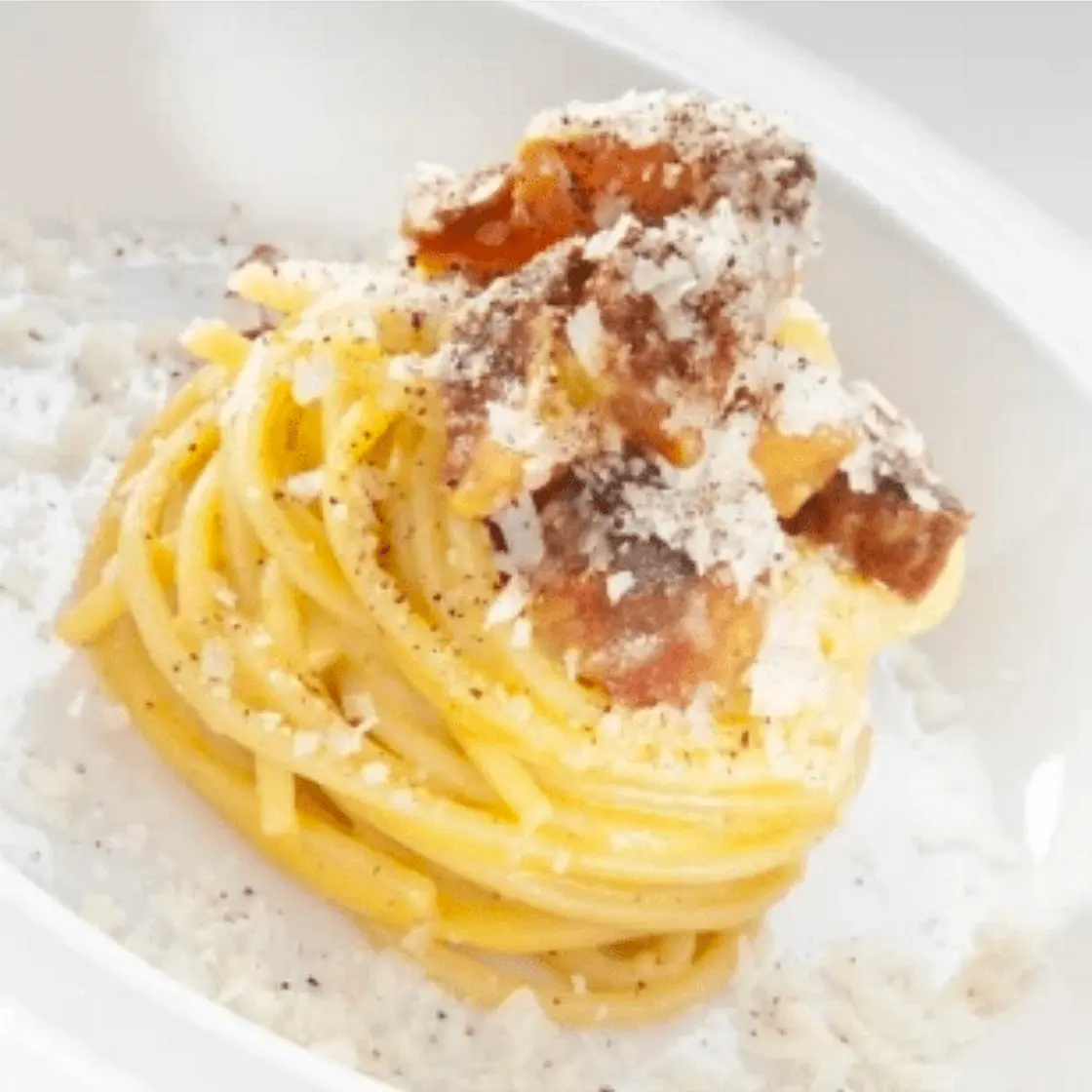
Re Della Carbonara
6 steps
Prep:10minCook:20min
This recipe is my take on Rome’s acclaimed “Re della Carbonara”, made by chef Luciano Monosilio, known as
the King of Carbonara. Unlike the rustic trattoria version, this method treats carbonara with precision.
The result is a carbonara that feels both traditional and refined. It’s a dish that rewards precision, a few degrees
too hot or a few seconds too slow and the sauce can break, but when done right, it transforms a humble Roman
classic into something truly amazing.
Updated at: Mon, 06 Jul 2026 21:28:02 GMT
Nutrition balance score
Unbalanced
Glycemic Index
57
Moderate
Glycemic Load
30
High
Nutrition per serving
Calories647.2 kcal (32%)
Total Fat40.7 g (58%)
Carbs52.1 g (20%)
Sugars2.6 g (3%)
Protein20 g (40%)
Sodium706.7 mg (35%)
Fiber2.6 g (9%)
% Daily Values based on a 2,000 calorie diet
Ingredients
4 servings


Instructions
Preperations
Step 1
Remove the pepper crust and tough rind from the guanciale. Dice into precise 1.5 cm cubes, this size ensures a crisp exterior and a tender interior without drying out.
 guanciale200 gr
Cooking
Step 2
Bring as little water as possible to a boil (to maximize starch concentration). Salt lightly, remember both guanciale and pecorino bring salinity. Cook the spaghettoni until 1-2 minutes shy of al dente; it will finish cooking later in the sauce. Reserve plenty of pasta water before draining.
(continue to the next step while it's cooking)
 Spaghettoni280 gr
Step 3
Place the cubes in a cold pan and bring to medium heat. As the fat renders, lower the heat to prevent overcooking. Cook until the edges are golden and crisp but the centers remain juicy. Remove guanciale from the pan and reserve the rendered fat separately.
guanciale200 grStep 4
In a large heatproof bowl set over barely simmering water (bain-marie), whisk together the yolks, grated cheeses, and black pepper. Begin drizzling in half of the rendered guanciale fat along with a splash of hot pasta water. Whisk vigorously and continuously: the goal is a light and airy sauce.
 egg yolks4
  Grana padano30 gr
 pecorino romano15 gr
 black pepper2 gr
Step 5
Add the drained spaghettoni directly into the bowl with the egg mixture. Toss continuously, adjusting with pasta water and reserved fat until the sauce clings silkily to the pasta. Work quickly and keep the movement constant, this is the critical stage where the sauce can break if overheated or left still.
Spaghettoni280 grStep 6
Fold in the crisp guanciale cubes. Plate immediately, topping each portion with an extra sprinkle of pecorino and a generous grind of black pepper. Serve hot.
guanciale200 gr