
By Julianne Moore
Easy Gluten Free Potato Flatbread
26 steps
Prep:30minCook:1h
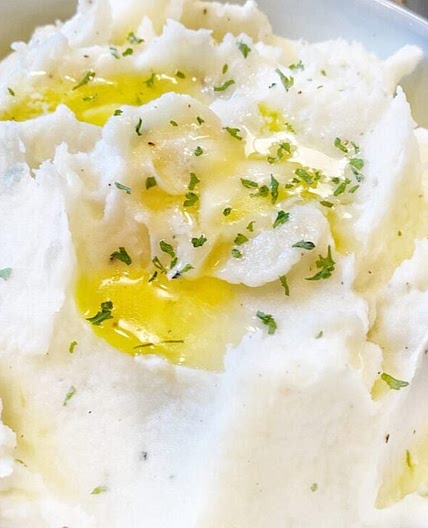
You can use either riced potatoes or leftover mashed potatoes. You’ll need 300g of whichever form of potatoes you choose. Make sure that they’re either lukewarm or cooled completely to room temperature before you add them to the dough.
The best leftover mashed potatoes for this recipe are ones that aren’t overloaded with lots of butter, cream and/or milk. If they’re very rich in fats or contain a lot of milk, you may need to increase the amount of millet flour slightly.
For best results, weigh your ingredients. The density – that is, the weight per cup – of both riced and mashed potatoes can vary enormously depending on how tightly you pack them (in the case of riced potatoes) and the preparation method (in the case of mashed potatoes). The same goes for gluten free flours: different brands and even different batches can have vastly different densities. So, if you want to get the perfect flatbread every single time, weigh your ingredients with a digital food scale.
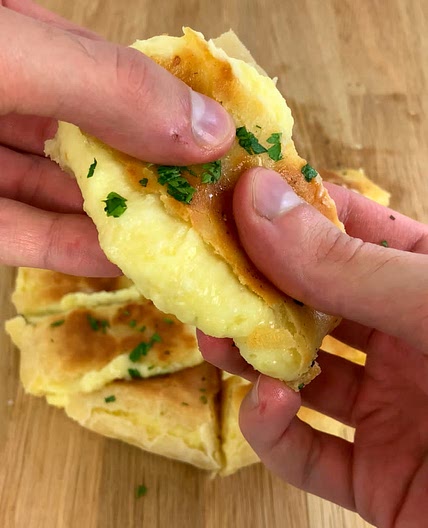
Psyllium husk acts as a binder and a gluten substitute. It ensures that you’ll get a workable dough that you can knead and roll out into individual flatbreads without cracking or tearing, and it gives the cooked flatbread just enough chewiness and flexibility so you can fold it or roll it up.
You can make the dough by hand or using a stand mixer fitted with the dough hook attachment. In either case, it’s ready in minutes – you just need to knead all the ingredients together until the dough is perfectly smooth with no clumps of either psyllium gel or dry, unmixed flour.
Roll out each flatbread until it’s about 1-2mm thin and 9-9½ inches (23-24cm) in diameter. Make sure to roll it out on a generously floured surface and lightly flour the top of the flatbread as well, so the rolling pin won’t stick to it. Before you start cooking it, brush away as much of the excess flour as you can.
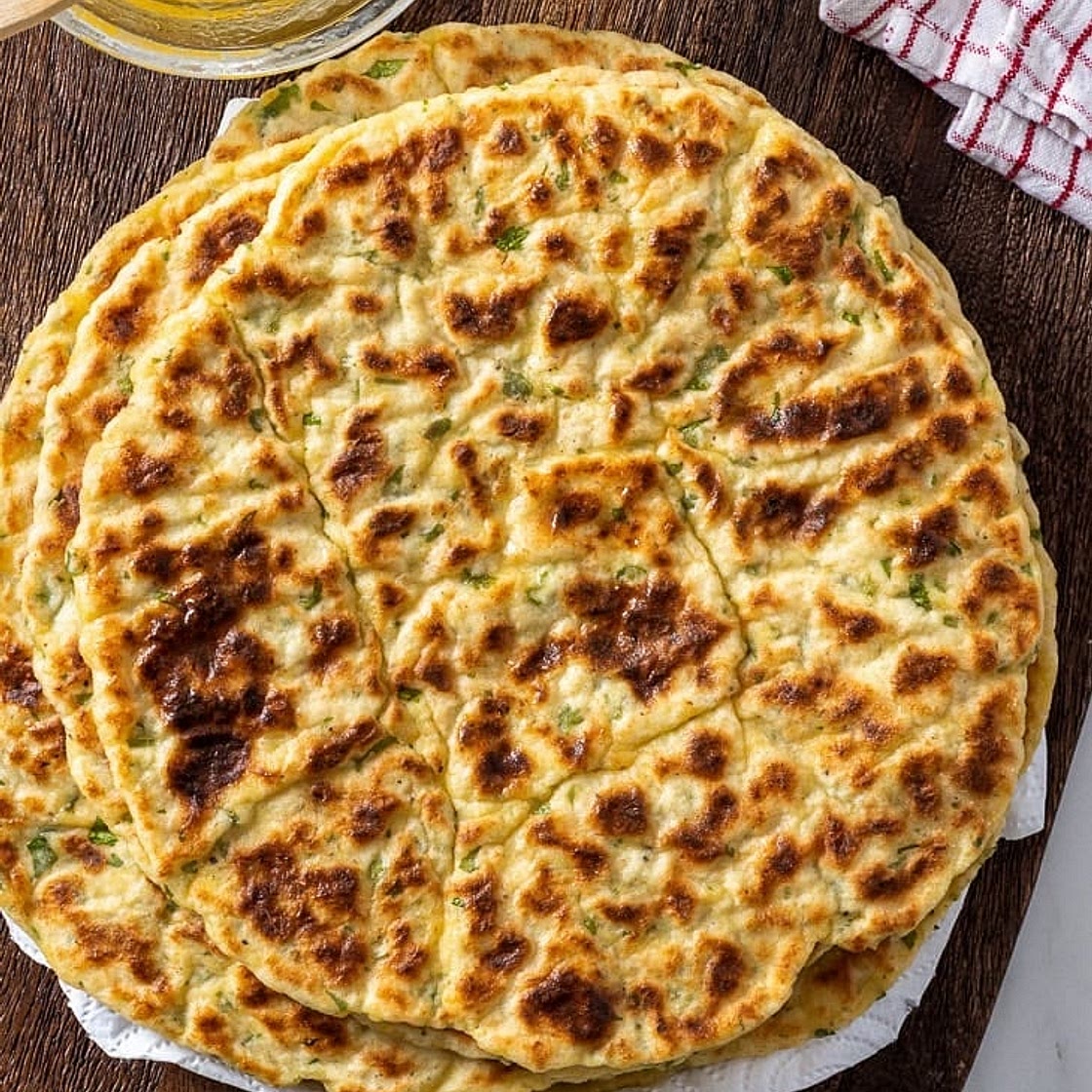
Cook the flatbread over medium to medium-high heat, and adjust the heat as necessary during cooking. If the flatbread is browning too quickly, reduce the heat slightly.
Updated at: Wed, 05 Aug 2026 13:08:02 GMT
Nutrition balance score
Good
Glycemic Index
67
Moderate
Glycemic Load
19
High
Nutrition per serving
Calories210.2 kcal (11%)
Total Fat8.7 g (12%)
Carbs28.3 g (11%)
Sugars0.7 g (1%)
Protein5 g (10%)
Sodium367.2 mg (18%)
Fiber3.8 g (14%)
% Daily Values based on a 2,000 calorie diet
Ingredients
8 servings

300gpotatoes
medium

25gpsyllium husk
whole

330gwater
lukewarm

180gmillet flour
plus extra for flouring the surface, You can use an equal weight of finely ground/milled brown rice flour instead
30gsorghum flour
You can use an equal weight of light buckwheat flour, white teff flour or oat flour instead Use the latter only if you're not sensitive to oats

½ tspbaking powder

1 tspsalt

½ tspground pepper

½ tspgarlic powder

50gcheddar cheese
coarsely grated, shredded

6 Tbspfresh parsley
chopped

55gunsalted butter
melted
Instructions
Step 1
For freshly cooked, riced potatoes: Place the washed, skin-on potatoes into a pot and fill it with cold water, enough to fully cover the potatoes. Bring to a boil, then reduce the heat to medium and cook until the potatoes are fork tender (that is, easily pierced with a fork). This usually takes about 30 minutes.
Step 2
Drain the water and allow the potatoes to cool until warm, then peel them and use a potato ricer to rice them. You'll need 300g or about 3 cups of riced potatoes. I recommend weighing your riced potatoes, as their density can vary enormously based on how tightly you pack them into the cup.
Step 3
For leftover mashed potatoes: You'll need 300g or about 1½ cups of mashed potatoes. I recommend weighing them, as their density can vary greatly depending on the preparation method. Make sure that they're lukewarm or at room temperature when you add them to the dough.
Step 4
The best leftover mashed potatoes for this recipe are ones that aren’t overloaded with lots of butter, cream and/or milk. If they’re very rich in fats or contain a lot of milk, you may need to increase the amount of millet flour slightly.
Step 5
You can make the dough by hand or using a stand mixer fitted with the dough hook attachment.
Step 6
Make the psyllium gel: In a bowl (or the bowl of a stand mixer, if using), mix together the psyllium husk and lukewarm water. After about 30-45 seconds, a gel will form.
Step 7
In a separate bowl, whisk together the millet flour, sorghum flour, baking powder, salt, pepper and garlic powder.
Step 8
Add the riced or mashed potatoes (make sure that they're lukewarm or at room temperature!), grated cheddar, chopped parsley and the dry ingredients to the psyllium gel, and knead everything together until you get a smooth, supple dough. Make sure that there are no clumps of either psyllium gel or dry, unmixed flour.
Step 9
The final dough should come away from the sides of the bowl and be very springy and supple to the touch. It shouldn’t be too sticky.
Step 10
Depending on your potatoes, you may need to add up to about 1 tablespoon of extra water to make it softer, or up to about 1 tablespoon of extra millet flour to make it firmer and less sticky.
Step 11
Turn out the dough onto a lightly floured surface and shape it into a ball.
Step 12
Divide it into 8 equal portions. You can use a scale to make sure that they’re all of equal weight (each portion should weigh about 115g) or you can just eyeball it.
Step 13
Shape the pieces of dough into balls. Don’t worry if the surfaces of the dough balls aren’t perfectly smooth – that’s due to the lack of gluten and it won’t matter in the end, as you’ll be rolling them out anyway. As you move onto the next step (rolling out the flatbreads) keep the dough balls covered with a dish towel to prevent them from drying out.
Step 14
Place a dough ball onto a lightly floured surface and dust its top with more flour.
Step 15
Use a rolling pin to roll it out into a large, round flatbread, about 9-9½ inches (23-24cm) in diameter. It should be just under ⅛ inch thin, about 1-2mm.
Step 16
Make sure to rotate it frequently to prevent it from sticking to the surface. As necessary, dust the work surface and the top of the flatbread with more flour.
Step 17
Repeat with the rest of the flatbreads.
Step 18
Tip: I recommend rolling out all the flatbreads first and then cooking them. To prevent them from sticking to each other and drying out, stack them with pieces of parchment/baking paper in between and cover them with a clean dish towel.
Step 19
Pre-heat a large pan or cast iron skillet over medium to medium-high heat. The pan is ready when a droplet of water sizzles on its surface.
Step 20
Tip: Throughout the cooking process, adjust the heat as necessary. If the flatbread is browning too quickly, reduce the heat slightly. If it’s taking too long to brown, increase the heat.
Step 21
Place a flatbread into the hot pan or skillet and cook it on the first side for about 1 minute to 1 minute 15 seconds, or until golden brown spots appear underneath.
Step 22
Flip it and brush the top with melted butter. Cook on the second side for about 1 minute or until golden brown spots appear underneath.
Step 23
Flip it again, brush the top with melted butter and cook for about 45 seconds or until the spots underneath are of a deep brown colour.
Step 24
Flip for a final time and cook for about 30 seconds or until the spots underneath are of a deep brown colour.
Step 25
Repeat this process with all the other flatbreads. Keep an eye on how they’re cooking and adjust the heat as needed.
Step 26
Stack the cooked flatbreads on a plate lined with a paper towel – this will absorb any condensation that forms underneath the hot flatbreads. There’s no need to wrap them in a dish towel to trap the steam, they’ll be perfectly soft and pliable without it.
View on theloopywhisk.com
↑Support creators by visiting their site 😊
Notes
0 liked
0 disliked
There are no notes yet. Be the first to share your experience!