24 to 48 Hour Pizza Dough (Elements of Pizza)
100%
0
By Joseph Pecoraro
24 to 48 Hour Pizza Dough (Elements of Pizza)
This trouble-free dough makes a great pizza crust, delicate and flavorful. Mix the dough any time of day (I do mine in the evening), letting it bulk-ferment at room temperature for a couple of hours before shaping the dough balls. Let them rest, covered, in the refrigerator until the next evening or two days later.
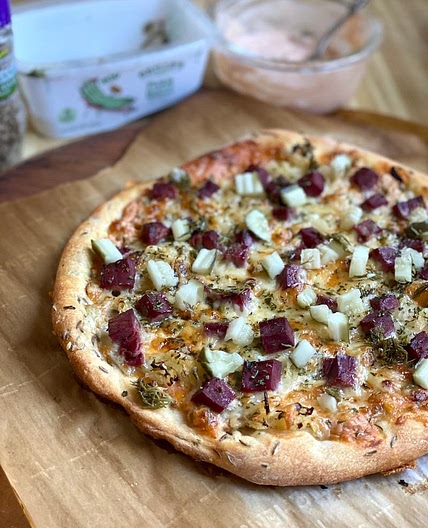
There is no morning step. Just give your dough balls an air kiss before you go off to work and let them slowly do their thing in the fridge. When you get home from work, the dough balls are already made up. All you have to do is fire up the oven, make a quick sauce, slice some cheese, and presto, it’s apizza.
But the thing is, it’s not just pizza. I was surprised by how good the pizza made from this dough is. This is one of the best doughs in this book. The long fermentation helps give the pizza crust a very tender lightness, and the airiness of the cornicione is just…wow. I think you’ll be impressed. In Italy, a long-fermented dough like this would be called “very digestible.” I love Italy.
Updated at: Thu, 17 Aug 2023 04:48:14 GMT
Nutrition balance score
Unbalanced
Glycemic Index
75
High
Glycemic Load
58
High
Nutrition per serving
Calories365.7 kcal (18%)
Total Fat1.5 g (2%)
Carbs77.3 g (30%)
Sugars0 g (0%)
Protein10.9 g (22%)
Sodium1024.7 mg (51%)
Fiber0 (0%)
% Daily Values based on a 2,000 calorie diet


Instructions
Step 1
1 Measure and Combine the Ingredients. Using your digital scale, measure 350 grams of 90° to 95°F (32° to 35°C) water into a 6-quart dough tub. Measure 13 grams of fine sea salt, add it to the water, and stir or swish around in the tub until it’s dissolved. Measure 1.5 grams (¾ of ½ teaspoon) of instant dried yeast. Add the yeast to the water, let it rest there for a minute to hydrate, then swish it around until dissolved. Add 500 grams of flour (preferably 00) to the water-salt-yeast mixture.”
Step 2
2 Mix the Dough. Mix by hand, first by stirring your hand around inside the dough tub to integrate the flour, water, salt, and yeast into a single mass of dough. Then use the pincer method to cut the dough in sections with your hand, alternating with folding the dough to develop it back into a unified mass. Continue for just 30 “seconds to 1 minute. The target dough temperature at the end of the mix is 80°F (27°C); use your probe thermometer to check it.
Step 3
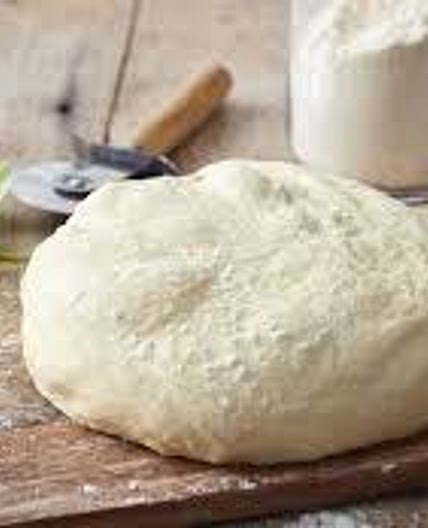
3 Knead and Rise. Let the dough rest for 20 minutes, then knead it on a work surface with a very light dusting of flour for about 30 seconds to 1 minute. The skin of the dough should be very smooth. Place the dough ball seam side down in the lightly oiled dough tub. Cover with a tight-fitting lid. Hold the dough for 2 hours at room temperature (assuming 70° to 74°F/21° to 23°C) for the first rise.
Step 4
4 Shape. Divide the dough and shape it into dough balls. Moderately flour a work surface about 2 feet wide. With floured hands, gently ease the dough out of the tub. With your hands still floured, pick up the dough and ease it back down onto the work surface in a somewhat even shape. Dust the entire top of the dough with flour, then cut it into 3 or 5 equal-sized pieces, depending on the style of pizza. Use your scale to get evenly sized dough balls. Shape each piece of dough into a medium-tight round following the instructions on this page, working gently and being careful not to tear the dough. There is no floor time for these dough balls before going into the refrigerator.
Step 5
5 Second Fermentation. Put the dough balls on one or two lightly floured dinner plates, leaving space between them to allow for expansion. Lightly flour the tops, tightly cover with plastic wrap, and put them into the refrigerator. Refrigerate until ready to make pizza, either the next evening (ideal) or the day after (still good).
Step 6
6 Make Pizza. Remove the dough balls from the fridge 60 to 90 minutes before making pizza.
Notes
1 liked
0 disliked
There are no notes yet. Be the first to share your experience!