Samsung Food
Log in
Use App
Log in
Katya Lyukum
By Katya Lyukum

Easy-Fizzy Cucumbers

2 steps
Prep:5min
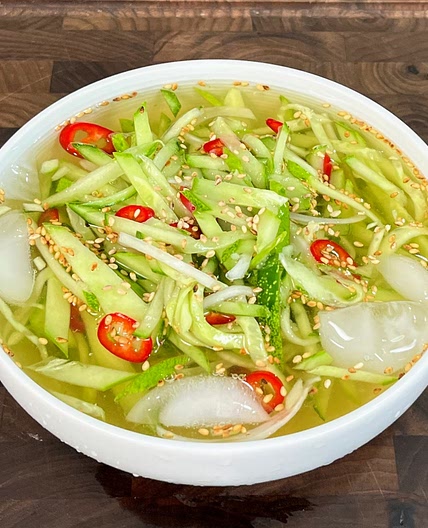
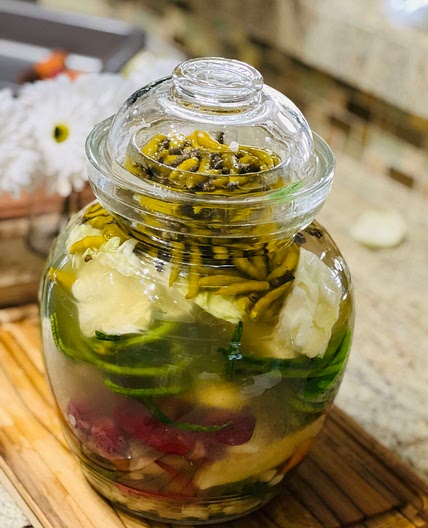
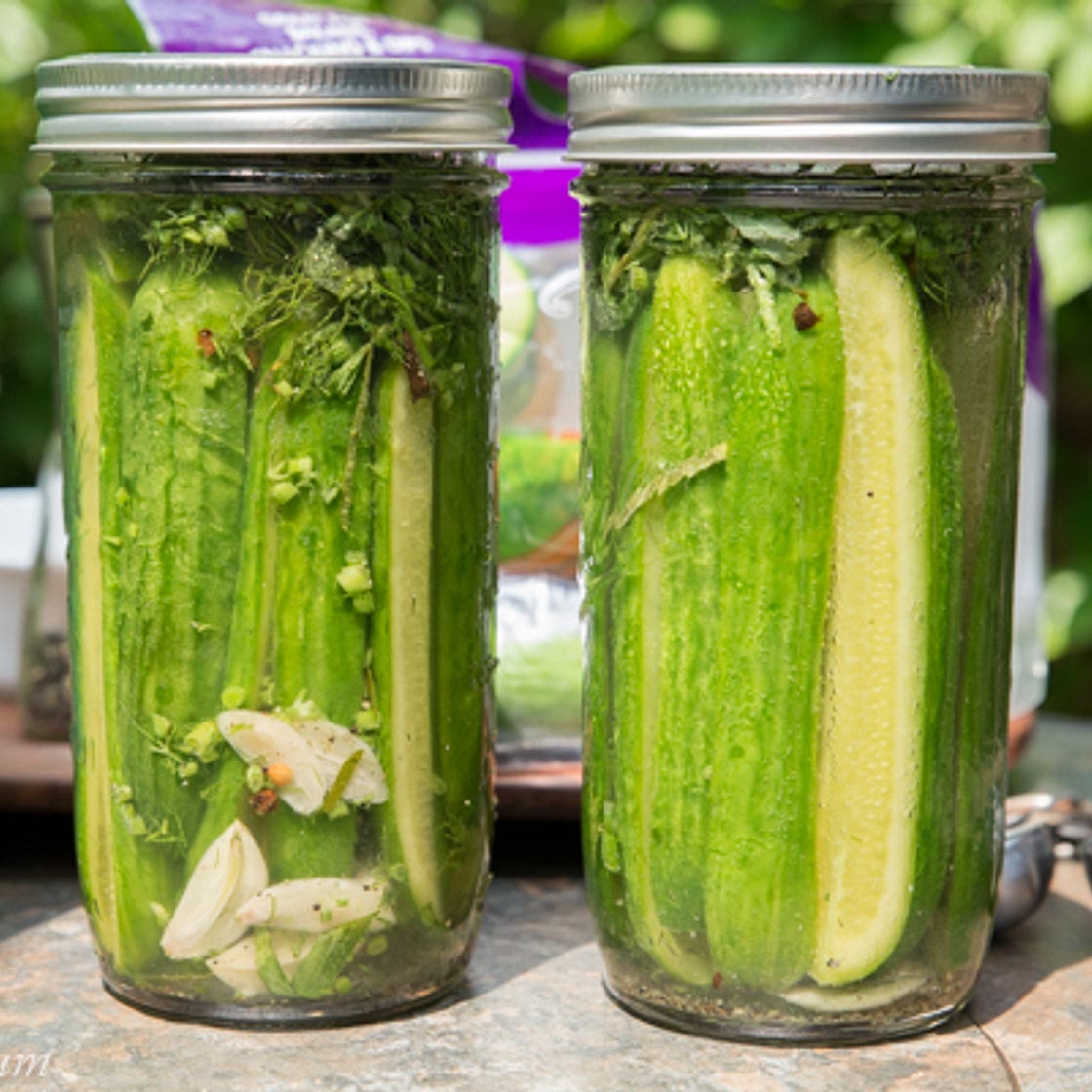
While in the U.S. carbonation became a molecular gastronomy term and technique that requires buying special equipment. This recipe shows how to make lightly salted and carbonated cucumbers at home with no special tools and ingredients. What if you don’t have small cucumbers? Replace them with English cucumbers, but peel and cut them into equally sized spears. What if you don’t have San Pellegrino? Any mineral carbonated water works. Make sure it is not heavy on minerals content. Taste it. If you like it for drinking, you’ll enjoy using it for this recipe. This recipe makes one 1.5-pint jar of cucumbers.
Updated at: Thu, 17 Aug 2023 09:45:27 GMT

Nutrition balance score

Unbalanced
Glycemic Index
17
Low
Glycemic Load
3
Low

Nutrition per serving

Calories80.7 kcal (4%)
Total Fat0.6 g (1%)
Carbs18.5 g (7%)
Sugars7.3 g (8%)
Protein3.5 g (7%)
Sodium3736.5 mg (187%)
Fiber2.5 g (9%)
% Daily Values based on a 2,000 calorie diet

Instructions

Step 1
Prepare clean wide-mouth jar(s) and lid(s). Wash cucumbers and herbs. Prepare spices and measure salt.
Step 2
Slice garlic and cut cucumbers to spears. Place salt, sliced garlic, and half of the spices and herbs on the bottom of the jar. Pack the jar with cucumber spears and place the rest of the herbs and spices on top. Fill the jar with refrigerated carbonated mineral water to the top and seal with a lid. Turn the jar upside down a couple of times, watching how salt dissolves. Live at room temperature for 2 hours, then refrigerate. Cucumbers are ready to eat in 12 hours and for the next 2-3 days.
View on lyukum.com
Support creators by visiting their site 😊

Notes

3 liked
0 disliked
Crispy
Delicious
Easy
Go-to
A Bit of Food Science Salt. Water flows through food cell membranes towards greater concentrations of dissolved particles. This chemical process is known as osmosis. When we place food in salty water, we “dry” it in liquid. Because salt concentration is higher outside food than inside, food loses its juices until the balance between inside and outside is reached. Plant cells “dry out” as much as 50%, reducing the water activity. Carbon dioxide is soluble in water and can travel through food cell membranes. Since fruit and vegetables have high water content, they can be carbonated. (Cucumbers have the highest water content of any solid food at 97 percent!) Carbon dioxide + salt. Adding salt to carbonated water gives the carbon dioxide gas more surface area to form bubbles. Salt accelerates the process of de-carbonation because the more bubbles are formed, the easier it is for the gas to escape. What happens if we fill a jar with cucumbers and salted carbonated water to the top and seal it? There is nowhere for CO2 to escape but inside cucumbers. The combination of carbon dioxide and salt makes the water more active and speeds up processes in the jar. The Taste of Fizziness. Many Russian-speaking food bloggers agree this recipe makes cucumbers taste similar to malossol ones. Why, if no acidic agents are added? “In later 2009, a team of neuroscientists […] showed that sour-sensing cells [in our taste buds] are the ones that respond to carbonation. […] the sensation begins when an enzyme on the tongue's surface converts carbon dioxide into ions of bicarbonate and hydrogen. The hydrogen ions then trigger the taste bud receptors, which report a sour taste to the brain.” (Modernist Cuisine, V.2, page 465)