Samsung Food
Log in
Use App
Log in
Katya Lyukum
By Katya Lyukum

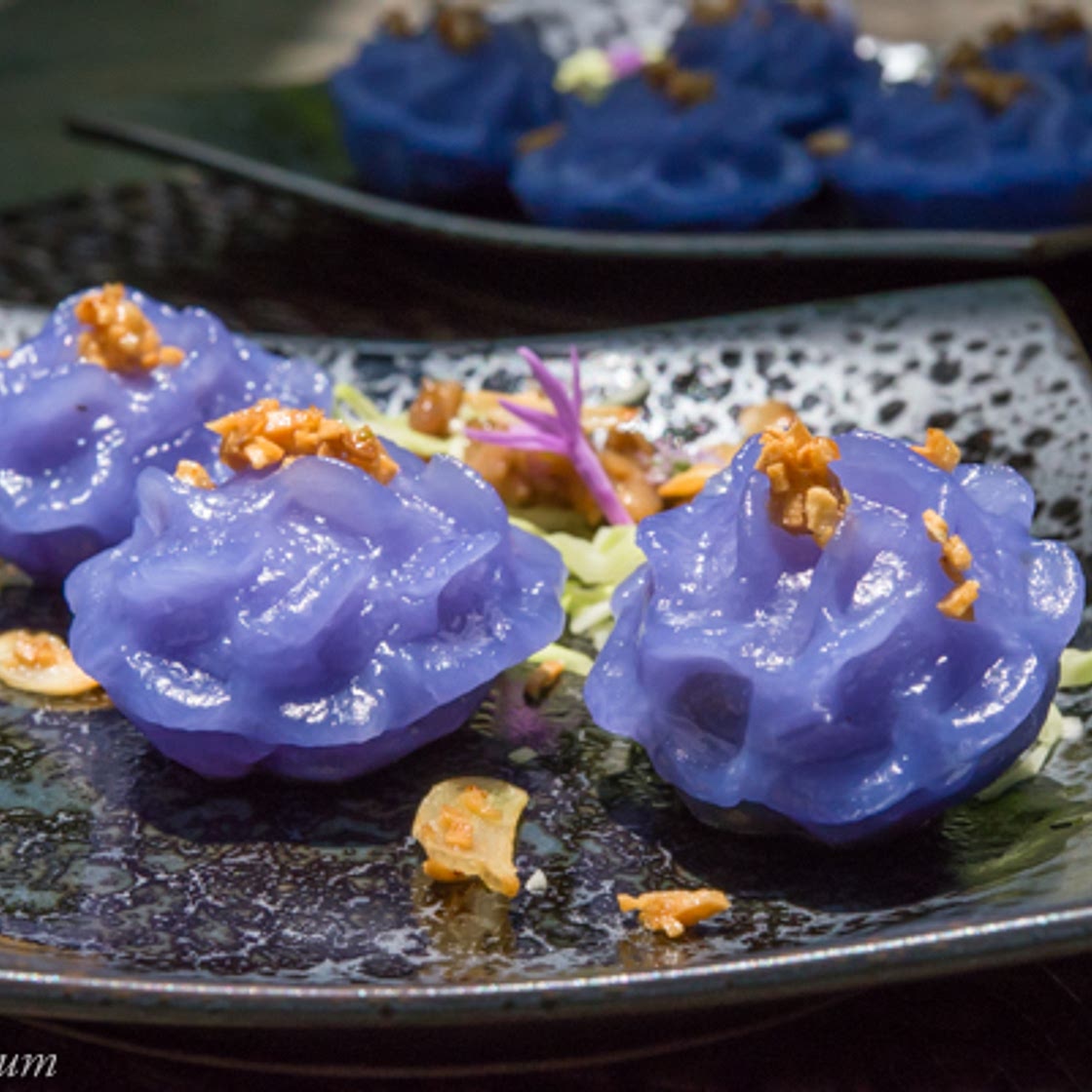
Chor Muang | Blue Flower Thai Dumplings

9 steps
Prep:30minCook:6min
Chor Muang, ช่อม่วง — flower-shaped savory dumpling — is one of the most popular traditional appetizers in Thailand. It is also one of the dishes common in restaurants that claim to be royal or traditional. Besides its unusual shape, Chor Muang is known for its beautiful blue color — rare among natural food coloring, yet natural — derived from petals of butterfly pea flowers. The beauty of these dumplings attracts the eye, and the taste captures the heart.
Updated at: Thu, 17 Aug 2023 02:51:31 GMT

Nutrition balance score

Great
Glycemic Index
62
Moderate
Glycemic Load
7
Low

Nutrition per serving

Calories91.4 kcal (5%)
Total Fat4.2 g (6%)
Carbs11.5 g (4%)
Sugars1.4 g (2%)
Protein2.9 g (6%)
Sodium75.5 mg (4%)
Fiber1.7 g (6%)
% Daily Values based on a 2,000 calorie diet

Instructions

for Butterfly Pea blue water

Step 1
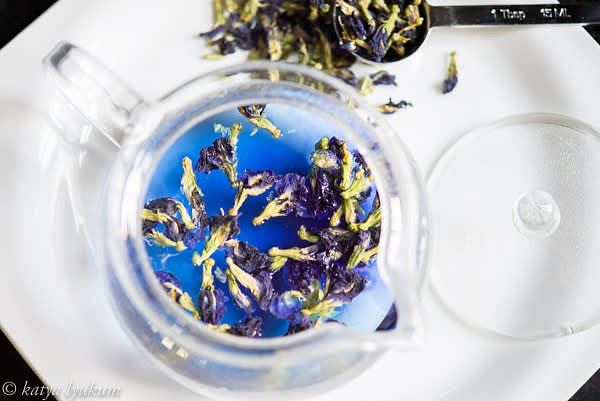
In a teapot, measure 1 tbsp of dry Butterfly Pea flowers and add 1 cup of boiling water. Steep for about 10-15 minutes.

for filling

Step 2
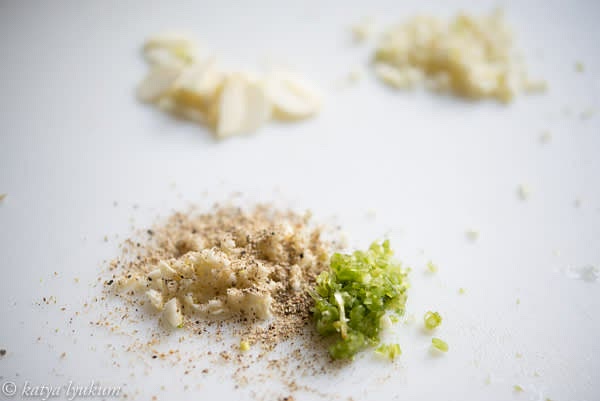
Peel and mince 3 tsp of fresh garlic. Finely chop cilantro stems.
Step 3
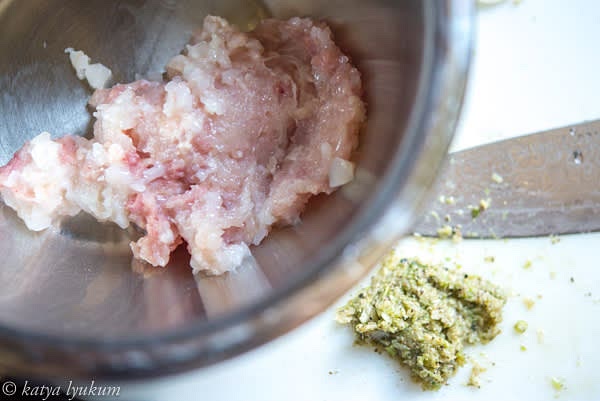
Mince chicken (and prawns or scallops, if using). Combine 1 tsp of garlic, 1 tsp of cilantro stems, and 1/3 tsp ground pepper and make a paste using a knife or mortar and pestle. Measure fish sauce and palm sugar.
Step 4
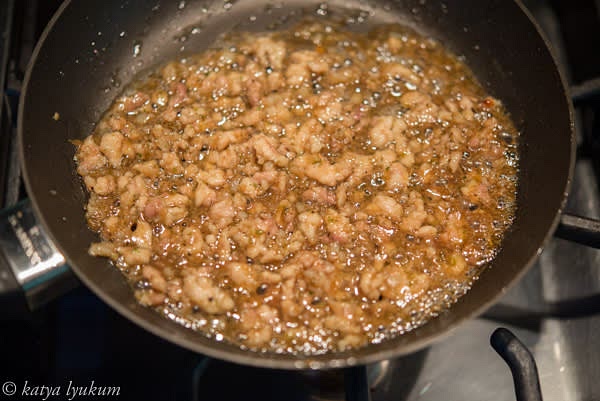
Heat 2 tsp of oil in a small skillet over medium heat. Saute garlic-cilantro-pepper paste for a few seconds, stirring, until sweet fragrance. Add chicken and stir-fry it for a minute, breaking clumps, until white. Season with fish sauce and sugar and continue cooking until caramelized, for about 1-2 minutes. Transfer into a small bowl and let cool to room temperature.

for dumplings

Step 5
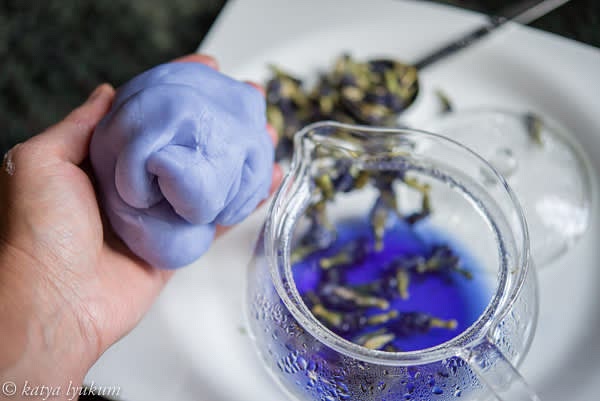
In a bowl, mix all wheat starch and 15g of tapioca starch with a whisk. Stir the blue teat and strain, lightly squeezing the flowers in a strainer. Measure 155ml of blue water into a teacup and bring it to boiling in a microwave. Immediately pour it all at once into the bowl with starches and combine into a paste using chopsticks. Cover the bowl with plastic wrap and let it rest for 5 minutes at room temperature. Add the rest of the tapioca starch and knead the dough until all is well combined and soft. Add oil and knead until the blue dough is smooth, soft, and pliable.
Step 6
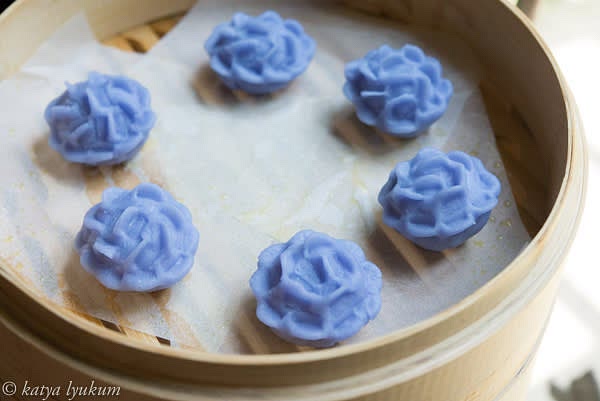
Shape the dough into a cylinder 1" D and divide it into 12 portions 1" long. Shape each piece into a ball. Keep them covered with a damp towel or plastic wrap to prevent drying. Line bamboo baskets with lightly oiled parchment paper. Shape dumplings one by one and place them into the baskets. Flatten each portion of dough into a round wrapper, place 1 tsp of filling in the center, and shape it into a ball. Using flat tongs, pinch petals.
Step 7
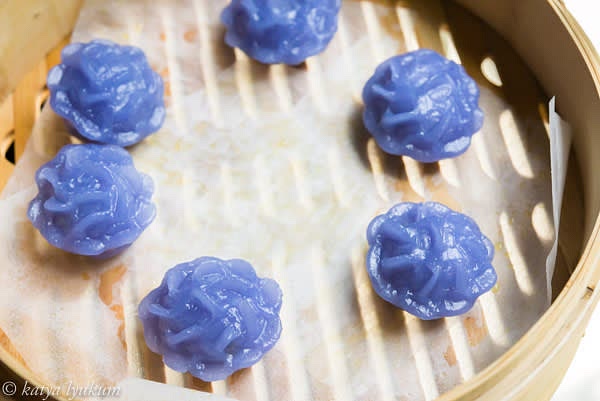
Steam dumplings for 5-6 minutes over medium heat.

for toppings

Step 8
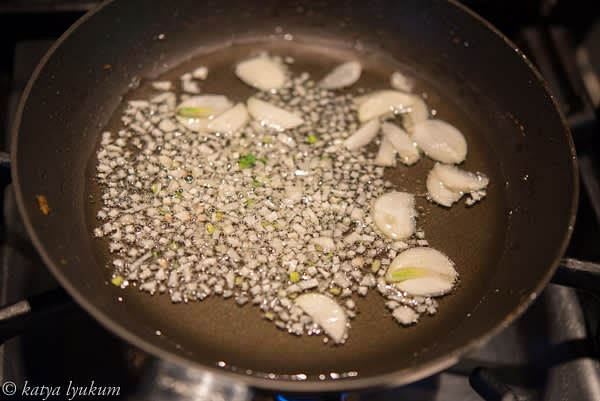
In a small skillet or saucepan, heat oil over low heat. Add minced or sliced garlic and slowly caramelize it until lightly golden. Strain oil and use it for other recipes.
Step 9
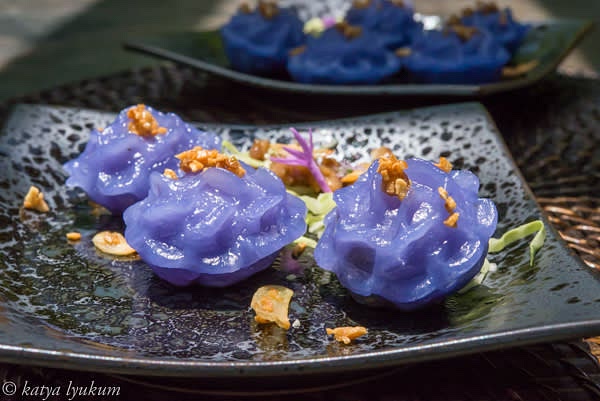
To serve, arrange green leafy vegetables and hot steamed dumplings on the plate and top them with crispy and sweet caramelized garlic.
View on lyukum.com
Support creators by visiting their site 😊

Notes

1 liked
0 disliked
Clitoria Ternatea Yes, it’s what you think it is. The Latin name of this flower comes from its appearance similar to the female reproductive organ. It is commonly known as a Blue pea or Butterfly pea in English. In Southeast Asia, the flower is used as a natural food coloring. Dry flowers and leaves (often with a combination of dry lemongrass) are also used to make a caffeine-free herbal tea that changes color based on the pH level — adding lemon juice to the tea will turn it purple. For a long time, Butterfly pea flower tea was primarily known in Southeast Asia. Still, it has become known worldwide and is available to buy online in the U.S. Its flavor is similar to earthy oolong teas with a note of fresh legumes. Many sources claim this tea has numerous medicinal properties. Gluten-Free Starches The original recipe for the wrappers includes a variety of gluten-free starches, four to five, depending on the source. I’ve seen mentioned non-glutinous and glutinous rice flour and tapioca, cassava, and arrowroot starches. They are not expensive but not readily available and are needed in small amounts. Besides, I experimented with many Asian gluten-free recipes for wrappers and found most of them not tasty. I am using my bullet-proof delicious gluten-free combination of two starches — wheat starch (do not confuse with wheat flour!) and tapioca starch. Sweet and Salty Proteins Charmed by the dumplings look, I didn’t care for the taste. I am an experienced and adventurous eater familiar with Asian cuisine, and it is difficult to confuse me. Fried garlic and a cup of tea? Bring it on! Yet, seeing the ratio of fish sauce and sugar to proteins made me uneasy. I reduced the amount three times and still hesitated to taste the result. Surprisingly, a bite-sized dumpling is pretty balanced in flavor and texture and pairs very well with tea! It is still exotic for beginners, but you'll be pleased if you like Asian cuisines in general and Thai food in particular.