
By Hiranmayi Khoday
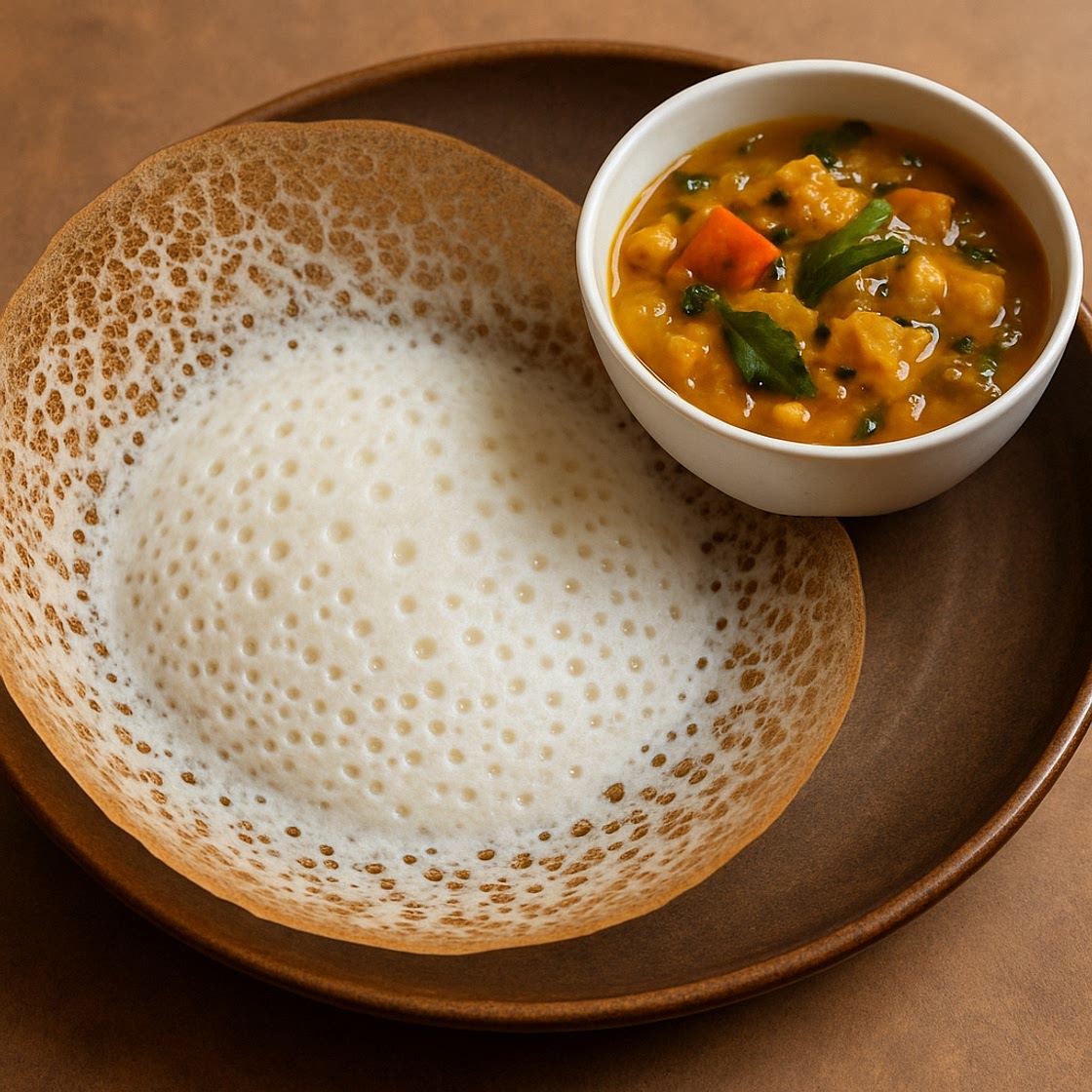
Perfect Soft & Lacey Appam
11 steps
Prep:20minCook:25min
Serves 4=makes approx 12-15 appams. Beginner-friendly appam recipe with soaked rice, cooked rice, coconut and yeast. Ferment overnight, adjust batter, then swirl and cook for soft centres and crisp lacy edges.
Updated at: Tue, 25 Aug 2026 06:02:22 GMT
Nutrition balance score
Unbalanced
Glycemic Index
60
Moderate
Glycemic Load
26
High
Nutrition per serving
Calories215.7 kcal (11%)
Total Fat2.4 g (3%)
Carbs43.5 g (17%)
Sugars0.4 g (0%)
Protein4 g (8%)
Sodium295 mg (15%)
Fiber1.3 g (5%)
% Daily Values based on a 2,000 calorie diet
Ingredients
4 servings


Instructions
Step 1
Wash the raw rice 2–3 times until the water is reasonably clear. Put it in a bowl, cover generously with water, and soak for 4–6 hours. Do not skip the soaking step; properly soaked rice grinds into a much smoother batter.
Step 2
Use about 1/4 cup cooked rice. Slightly soft or overcooked rice is ideal. Let it cool before blending.
Step 3
Drain the soaked raw rice well. Add the soaked rice, cooked rice and freshly grated coconut to a blender. Add water little by little and blend until completely smooth. The batter should have no noticeable gritty rice particles.
Step 4
In a small cup, mix 1/4 tsp instant yeast with 2 tbsp lukewarm water and the powdered jaggery. Stir and leave for 5 minutes. The water should feel pleasantly warm, never hot.
Step 5
Pour the yeast mixture into the ground batter and mix thoroughly. Add 1/2 tsp salt. At this stage the batter should be somewhat thick, similar to a thick dosa batter. Do not make it very thin yet.
Step 6
Cover the bowl loosely and keep it in a warm, draft-free place for about 8–10 hours. The exact time depends on your kitchen temperature. The batter is ready when it has visibly risen and looks airy, with small bubbles on the surface. If your kitchen is very warm, start checking earlier.
Step 7
After fermentation, gently stir the batter. Add water gradually until it becomes thinner than ordinary dosa batter. When poured into the centre of an appachatti and swirled, it should flow easily toward the edges while leaving enough batter in the middle for a soft, fluffy centre. If the batter is too thick, the appam will be heavy; if too thin, it will not develop a fluffy centre.
Step 8
Place an appachatti on medium heat. Let it heat properly before making the first appam. If the pan is seasoned/non-stick, you generally need little or no oil.
Step 9
Pour approximately 1 small ladleful of batter into the centre. Immediately lift the pan and gently swirl it in a circular motion 1–2 times. The batter should spread into a thin, lacy layer around the sides while a thicker pool remains in the centre.
Step 10
Place the pan back on the stove, cover with a lid, and cook on medium-low heat for about 1–2 minutes. The edges should become lightly golden and crisp, while the centre should look cooked, soft and fluffy. Do not flip the appam.
Step 11
Gently loosen the edges with a spatula if needed and transfer the appam to a plate. Let it sit uncovered briefly before stacking so steam does not soften the crispy edges. Repeat with the remaining batter.
Notes
0 liked
0 disliked
There are no notes yet. Be the first to share your experience!