
By Food System Team
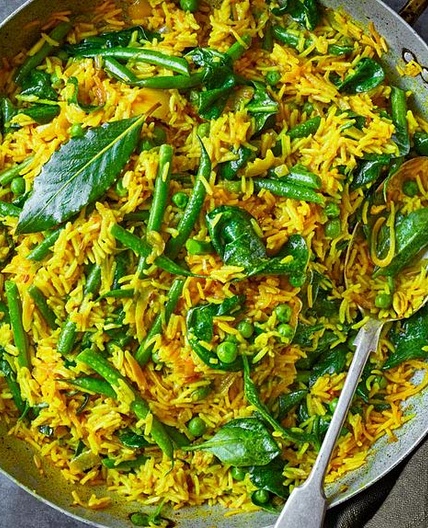
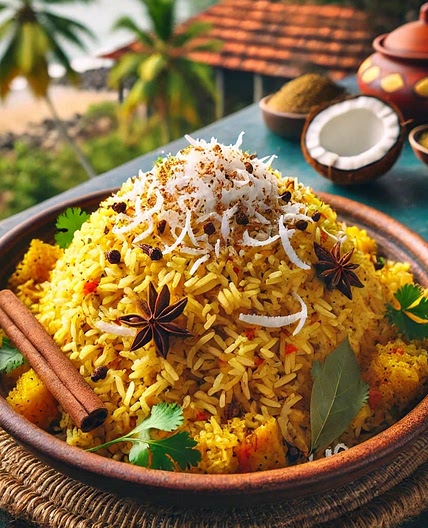
Khichuri-Food for the Soul
13 steps
Prep:1hCook:45min
This recipe was submitted by Ilika, who works with the Birmingham City Council in the Community Libraries. She is a mum to a lovely teen of 15 years and enjoys travelling, reading good poetry and exploring new cultures and cuisines. She says, "although I was born and brought up in India, I consider myself a proud Brummie."
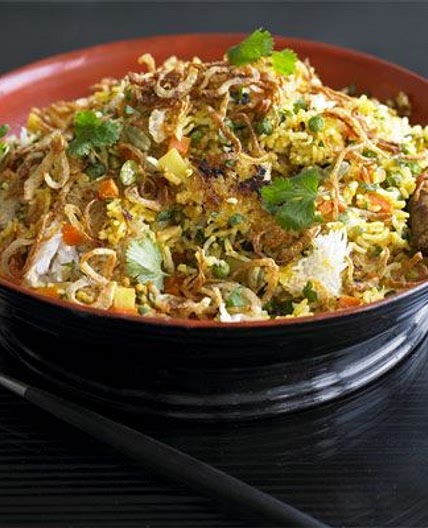
Khichuri, a traditional dish from the Indian sub-continent is the soul food for Indians living across the length and breadth of the country. It would perhaps not be wrong to say that khichuri qualifies as the nation’s favourite comfort food, owing to the convenience of being cooked in a single pot with two basic ingredients available in all Indian households -rice and lentils (dal). Khichuri bears a rich history and its origin in India can be traced way back in 1200 BC. It survived and flourished through the times of rulers like Chandragupta Maurya, travellers like Megasthenes and diplomats like Kautalya who mentioned it in their travelogues and treatises. The Mughals who invaded India and the English since the days of the Raj loved it. Ingredients added to khichuri depends on purpose. Since the Nizams in Hyderabad, khichuri is cooked in Andhra Pradesh by adding meat. In coastal Maharashtra, prawn is added to the dish. However, when cooked for someone recuperating from illness or a weaning baby, khichuri is cooked blander, with fewer spices to aid digestion. Khichuri is quite an adaptable dish, symbolising contentedness and wealth, as Indians welcome the whole world as a family. Khichuri has also travelled across the globe. An anglicised version in the UK is called kedgeree and is made using rice, boiled egg and haddock. Hence, whatever one may call it; khichuri still retains its uniqueness and beauty with rice, dal, vegetables, fish or meat being added to it. Khichuri is also an extremely healthy and balanced meal.
Updated at: Thu, 17 Aug 2023 01:03:43 GMT
Nutrition balance score
Great
Glycemic Index
46
Low
Glycemic Load
21
High
Nutrition per serving
Calories314.3 kcal (16%)
Total Fat10.1 g (14%)
Carbs46.7 g (18%)
Sugars3.4 g (4%)
Protein10.5 g (21%)
Sodium45 mg (2%)
Fiber7.5 g (27%)
% Daily Values based on a 2,000 calorie diet
Ingredients
8 servings


Your choice of vegetables


Spices


Instructions
Step 1
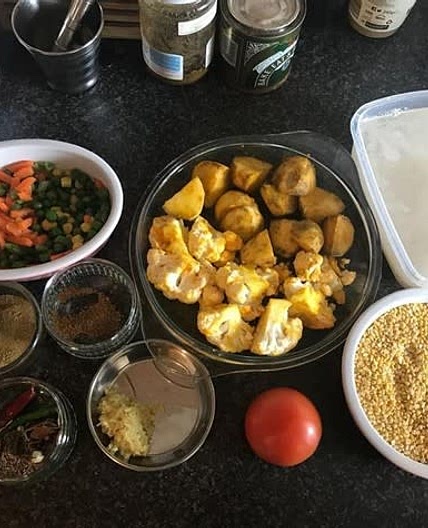
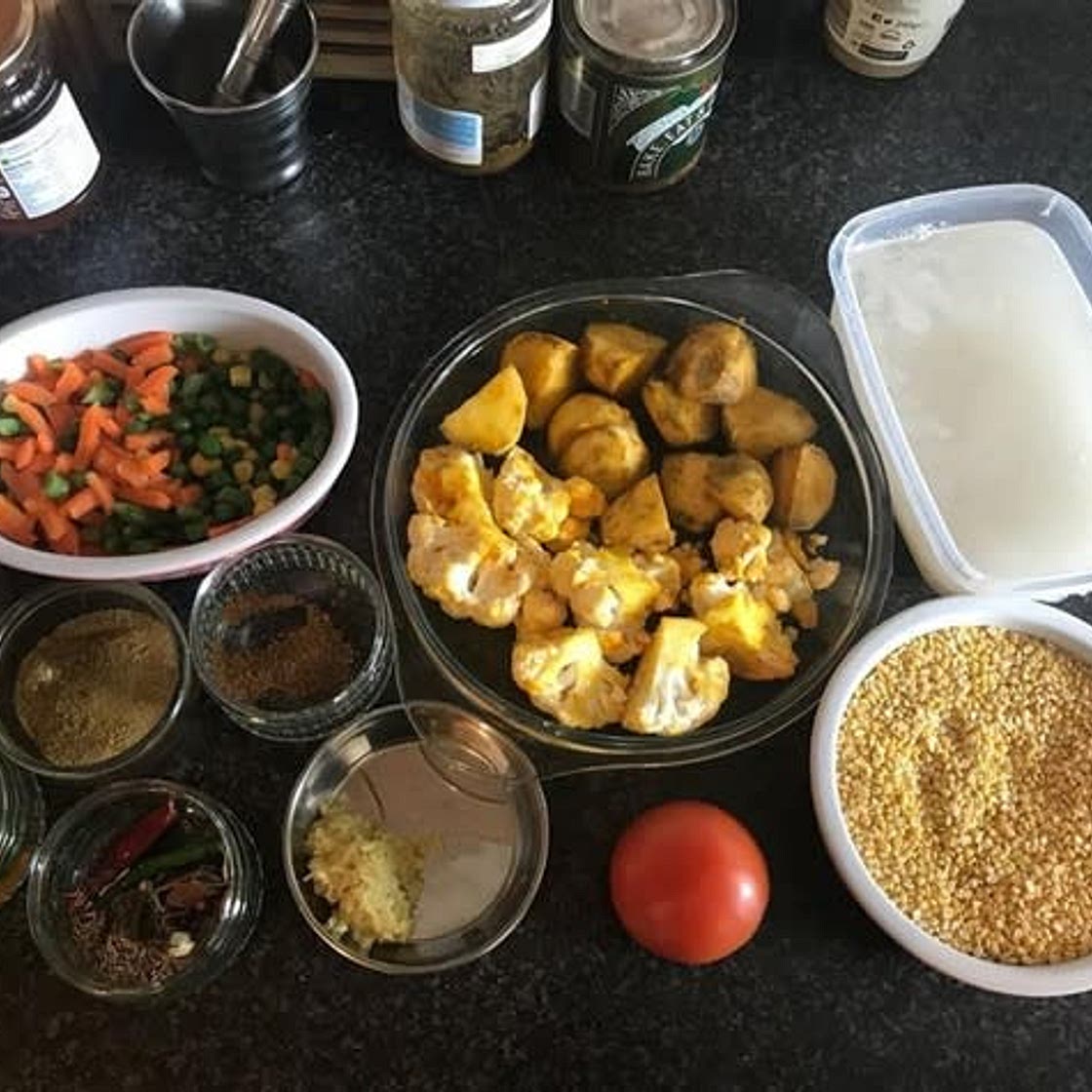
Dry roast 1 cup moong daal to an even light brown Wash and soak for some time and then put to boil.
Step 2
When daal is almost done and most of the water has evaporated, remove from fire.
Step 3
Wash 1 cup rice and keep soaked.
Step 4
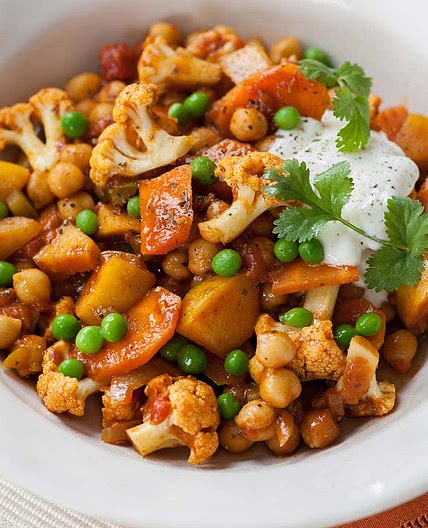
Cut vegetables of your choice - potatoes, cauliflower, broad beans, French beans, green peas, etc.
Step 5
Heat oil and fry the potatoes and cauliflower together to even golden.
Step 6
Now heat 2-3 tbsp of ghee and temper with whole jeera and bay leaf.
Step 7
Make a paste of 1 tbsp jeera powder, 1 tbsp dhaniya powder, 1 tbsp haldi powder, ½ tbsp chilli powder and 1 tbsp ginger paste.
Step 8
Fry this masala (spices) well until oil is released.
Step 9
Add the vegetables except for the peas which are added towards the end as they cook quicker. Cook the vegetables for about 5 minutes add then add the rice When rice is half cooked, add the daal and mix well along with salt as per taste and just a little bit sugar.
Step 10
Add with 2-3 green cardamoms, cloves and some cinnamon sticks for the aroma and flavour.
Step 11
Cook to a thick consistency.
Step 12
Take off the heat.
Step 13
You may add some more ghee and green chilies as dressing. Serve hot.
Notes
0 liked
0 disliked
There are no notes yet. Be the first to share your experience!