
By Katya Lyukum
Chicken Liver Pâté | Terrine de Foies de Volaille
9 steps
Prep:8hCook:5min
This recipe is a classic French/European recipe for chicken liver pate, except for the first step with soaking livers in a starchy ice bath. Soaking lean proteins in cold water (or flavored liquids) mixed with starch is “velveting,” a technique used to prevent delicate foods from overcooking. Overcooking livers is the most common mistake. It makes their texture dry and sandy. Soaking livers in cold starchy water makes it more difficult to overcook them and is a big help for beginners.
This recipe makes nine 4-oz jars of pate.
Updated at: Thu, 17 Aug 2023 06:02:50 GMT
Nutrition balance score
Unbalanced
Glycemic Index
41
Low
Glycemic Load
1
Low
Nutrition per serving
Calories311.7 kcal (16%)
Total Fat25.4 g (36%)
Carbs3.5 g (1%)
Sugars0.2 g (0%)
Protein17.4 g (35%)
Sodium601.2 mg (30%)
Fiber0.3 g (1%)
% Daily Values based on a 2,000 calorie diet
Ingredients
9 servings

2 lbchicken livers
trimmed

8 ozbutter
cold, cubed

½ cupleeks
white part, sliced

1 clovegarlic
diced

2 tspthyme
fresh, chopped

2 tspmarjoram
fresh, chopped

2 tspsage
fresh, chopped

1 ½ tspsalt

½ tspblack pepper
freshly ground

¼ tspallspice
freshly ground, optional

¼ tspnutmeg
freshly ground, optional

4 Tbspcognac
optional
for soaking chicken livers


Instructions
for soaking chicken livers
Step 1
If you have a choice, choose pale livers. Mix cold water, ice, starch, and salt in a big bowl. Add chicken livers, mix, and refrigerate overnight.
for pate
Step 2
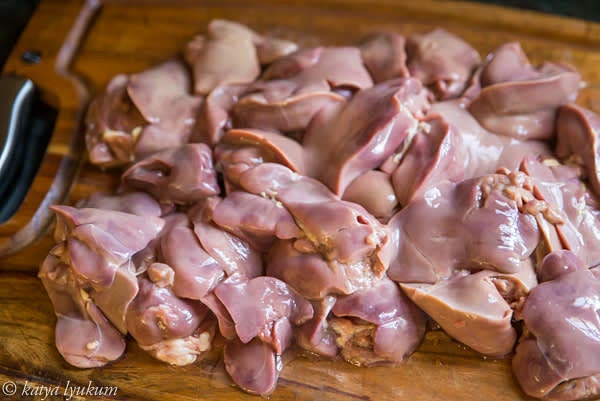
Drain livers.
Step 3
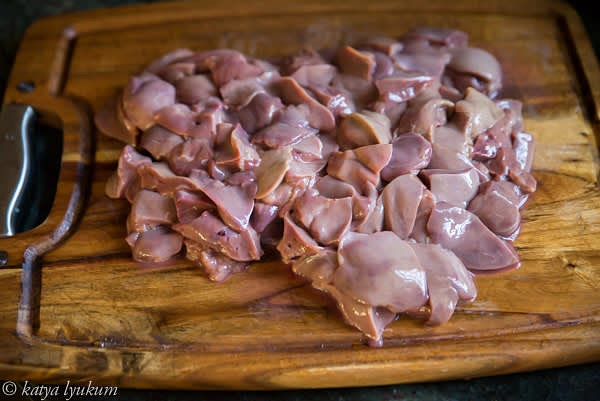
Trim all connective tissues and blood vessels. Cut livers to equally sized pieces.
Step 4
Slice, rinse and drain the leeks. Melt 1 tbsp of butter in a skillet and sauté leeks on medium heat until soft and sweet. Peel and dice garlic, stir it in at the end of cooking leeks. Transfer to a blender jar.
Step 5
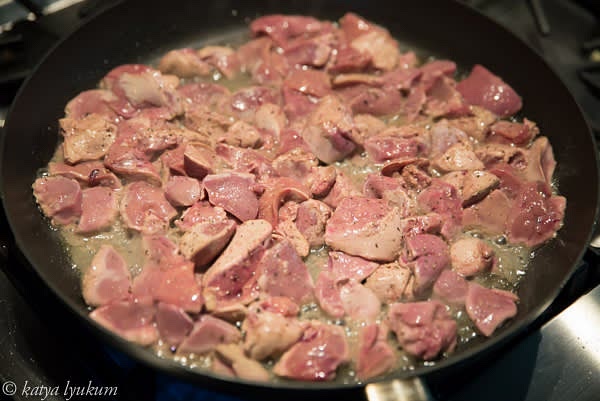
Melt 1 tbsp of butter in a skillet and sauté chicken livers on high heat. Season them with salt and pepper (and other optional spices).
Step 6
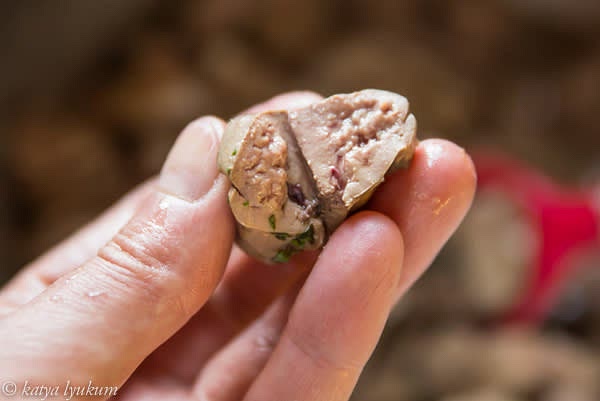
Cook for about 5 minutes, stirring until livers are cooked but still soft, juicy, and pink inside when cut open. Flambé with cognac and transfer to a blender jar.
Step 7
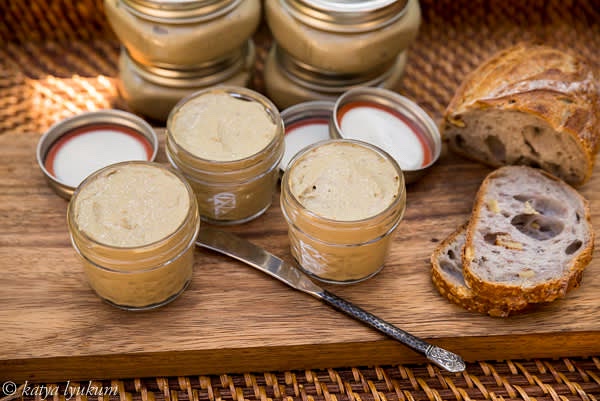
Prepare clean jars and lids. Blend the mixture in a blender until smooth for about 1 minute. Add cold cubed butter (to prevent overcooking) and blend on low speed for another 30 sec or just until completely emulsified. Transfer the pate into the jars while it is still warm — it makes it easier to avoid air bubbles trapped in the pate. Fill the jars to the top and close the lids. Refrigerate pate until firm, for at least 2 hours, before serving.
Step 8
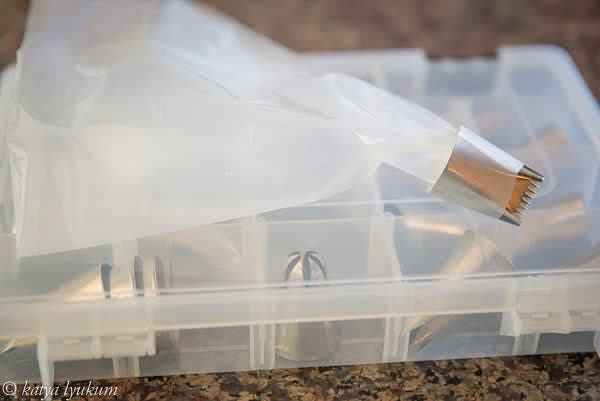
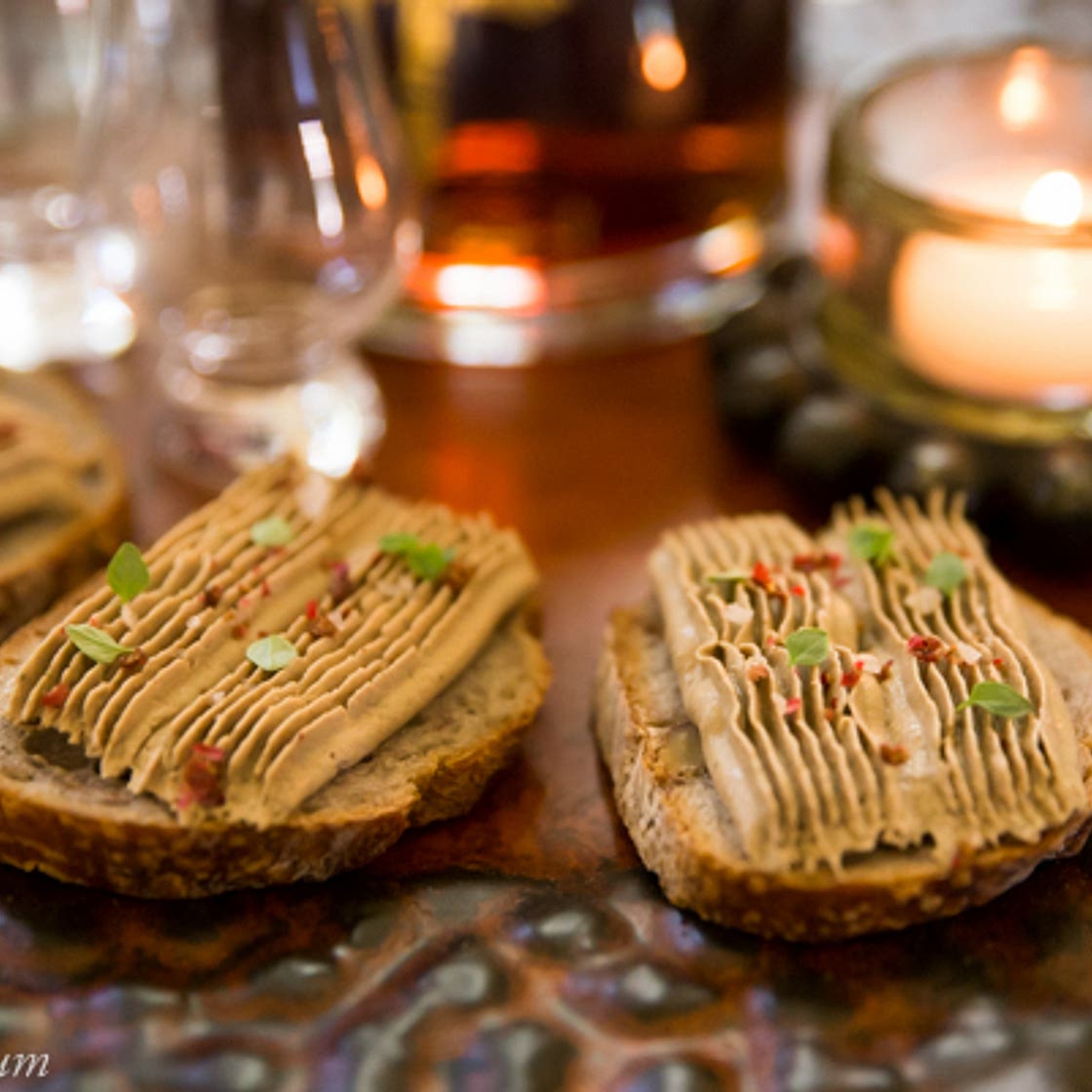
Serve with fresh crusty bread, preferably baguette, as a spread in a jar. It can also be served piped on a sliced baguette and served as ready-to-eat appetizers.
Step 9
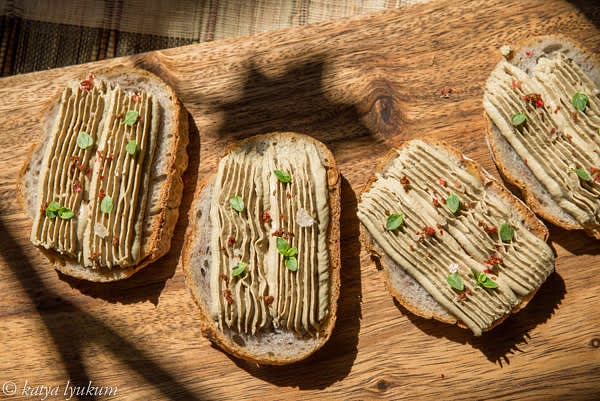
In case of serving it piped on slices of bread, play with different toppings — fresh thyme, crushed pink peppercorns, gourmet finishing salts are among the most popular.
View on lyukum.com
↑Support creators by visiting their site 😊