1/2
2/2
100%
1

By Katya Lyukum
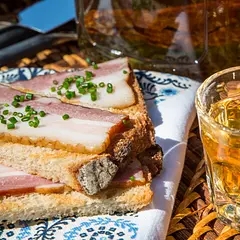
Salo | Ukrainian Style Salted Pork Belly
8 steps
Prep:5min
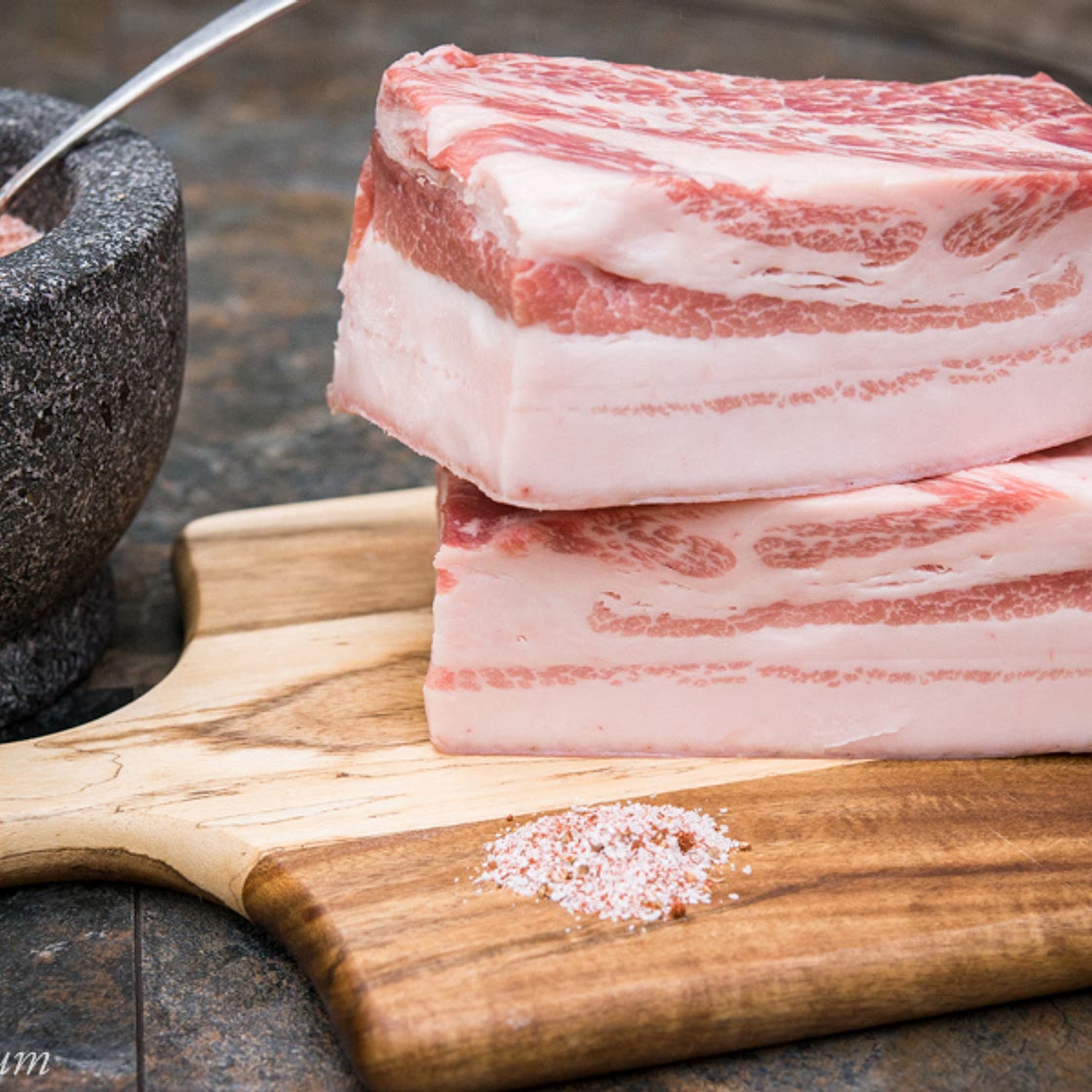
Ukrainians define salo as a slab of creamy white pork back fat on a golden pigskin. The layer of fat is usually measured with fingers and should be 3-5 fingers thick, with little or no meat.
Traditionally, before butchering the pig carcass, the first step is to blacken the pigskin with a torch, wash it with hot water, and carefully scrape the charred layer off. It is done 2 or 3 times. After that, the carcass is smoldered with rye hay. The result of this step is a salo with a thin layer of golden, pleasantly chewy, and soft golden pigskin, with delicate smokey notes.
Rosemary and thyme contain antioxidants that slow fat oxidation and work as preservatives. Garlic and paprika contain antioxidants, nitrites, and nitrates, which are responsible for color and flavor preservation and preventing the growth of harmful bacteria.
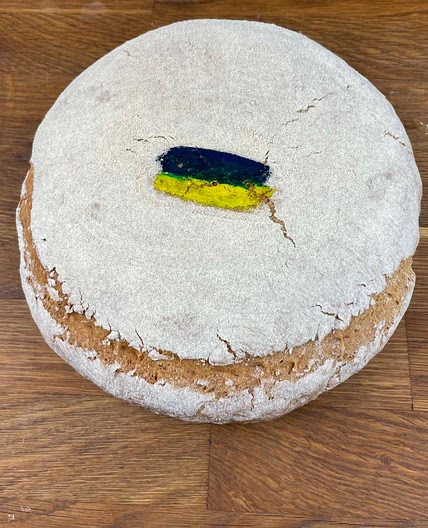
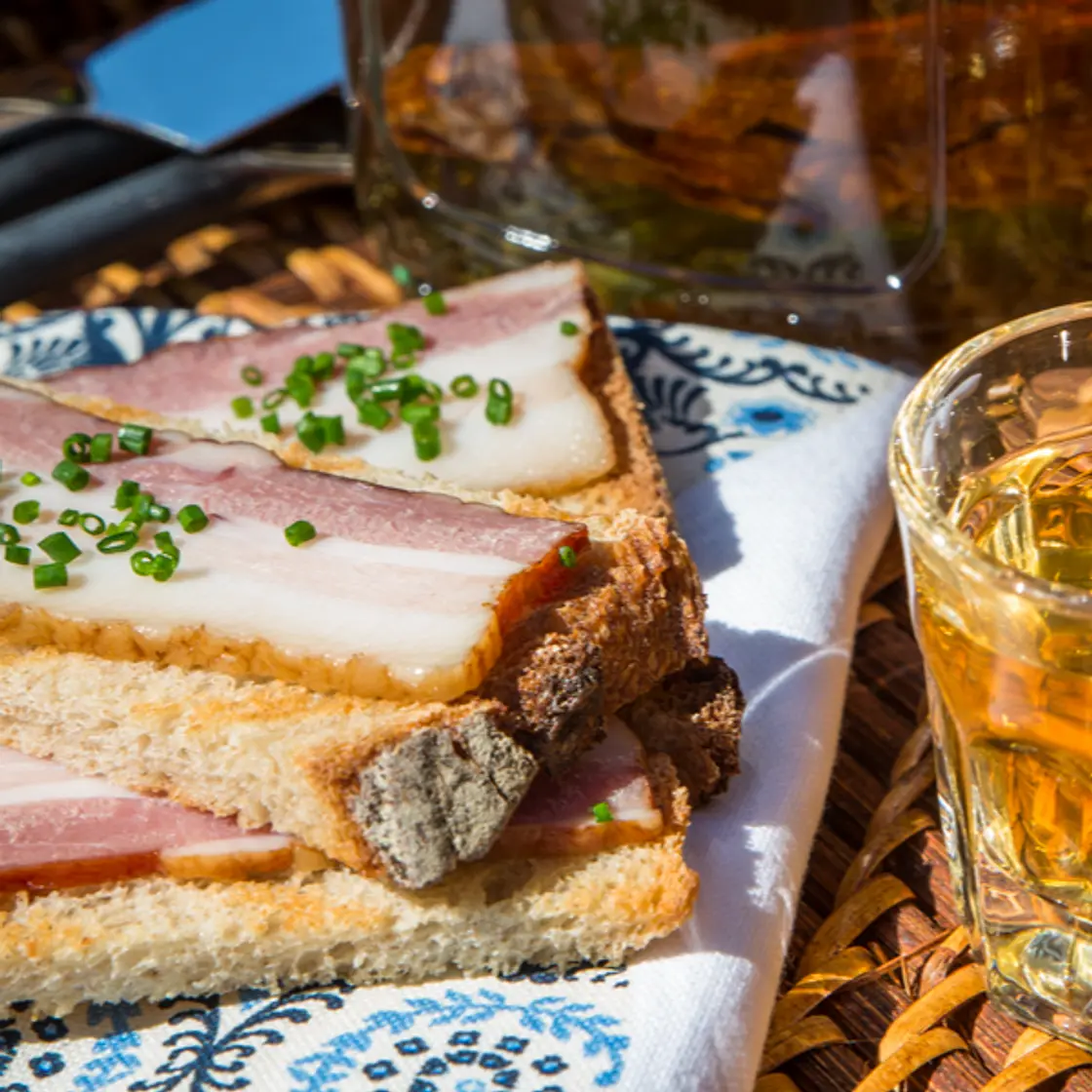
Сало можна їсти просто з хлібом, краще з чорним. Сало можна їсти з хлібом та цибулею, бажано на природі — від такого поєднання прокидаються народні архетипи, що сплять у душі. Сало можна їсти з хлібом, цибулею та горілкою — це основа основ, стовпи, на яких тримається оте відчуття чогось такого великого, близького, теплого та свіжого, наче сидиш біля багаття та дивишся у нічне небо. Але якщо їсти сало із чорним хлібом, цибулею, горілкою, гірчицею, печеною картоплею та квашеною капустою… Цей смак японці називають «омамі» — «бездоганний». — Дмитро Різниченко
You can eat salo just with bread, better — with dark rye bread. You can eat salo with bread and onions, and better — eat them outdoors. It brings up our national archetypes, which are hidden at the bottom of our souls. You can eat salo with bread, onions, and gorilka — this is the very foundation, the bedrock of what we feel like something great, intimate, warm, and fresh — as if you are sitting next to a bonfire and gazing up at the starry sky. But if you eat salo with rye bread, onions, gorilka, mustard, baked potatoes, and soured cabbage… That’s what Japanese call “umami” — “irreproachable.”
Updated at: Thu, 17 Aug 2023 02:47:01 GMT
Nutrition balance score
Unbalanced
Glycemic Index
26
Low
Glycemic Load
1
Low
Nutrition per serving
Calories2940.3 kcal (147%)
Total Fat298.8 g (427%)
Carbs0.7 g (0%)
Sugars0.1 g (0%)
Protein50.8 g (102%)
Sodium79203.5 mg (3960%)
Fiber0.4 g (1%)
% Daily Values based on a 2,000 calorie diet
Ingredients
2 servings


for Western-Ukrainian version of salt rub


for Eastern-Ukrainian version of salt rub


Instructions
for making salt rubs
Step 1
Break bay leaf into smaller pieces. Combine bay leaf, coriander seeds, black peppercorns, and 1 tsp salt and grind using mortar and pestle. (Note: use dedicated for spice grinding coffee grinder for more significant amounts.) Add paprika and the rest of the salt and mix well.
Step 2
Peel and slice garlic. Combine dry thyme and 1 tsp salt and grind using mortar and pestle. Add the rest of the salt and garlic and mix well.
for curing
Step 3
Cut the belly into four blocks, approximately 2" wide and 7" long. Prepare non-reactive containers (glass is preferred): spread flaky salt 1/4" thick on the bottom to absorb juices drawn from the belly. This salt needs to be replaced with a dry one at least once during the curing process. You will be curing the belly skin down, which will make the skin tough and salty. Arranging a few bamboo skewers on the bottom will help to reduce this effect.
Step 4
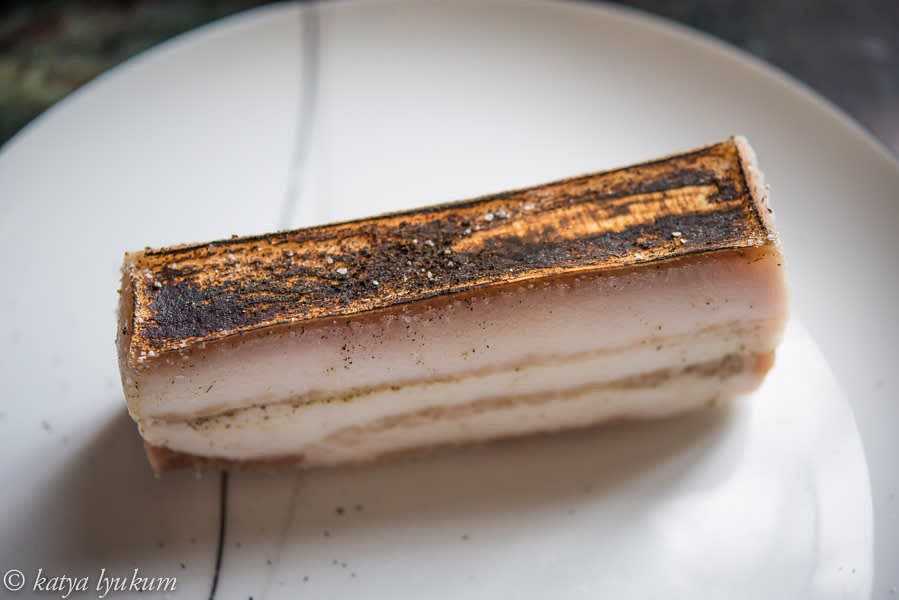
Blacken the pigskin with a torch. Wet it with hot water and scrape the charred part away. Repeat 2-3 times.
Step 5
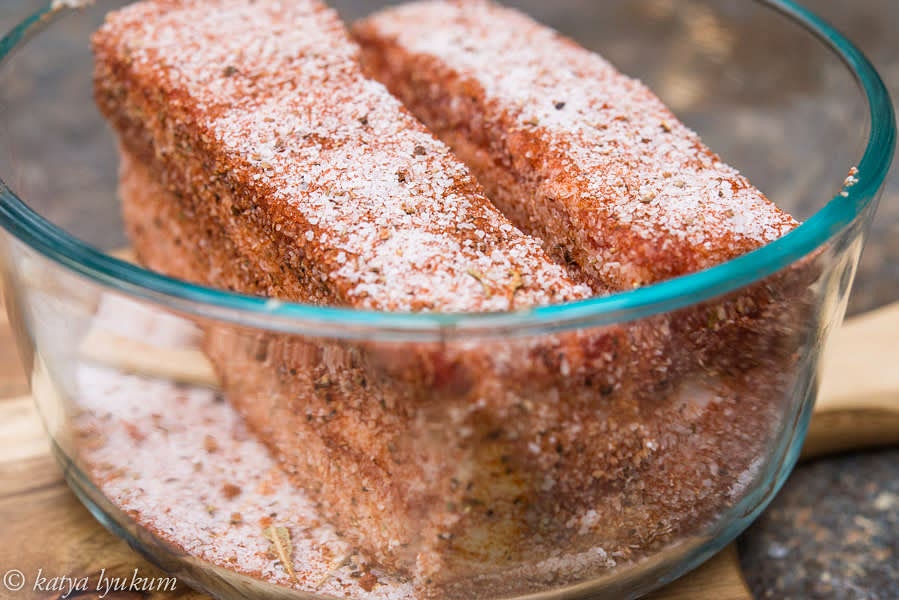
Spread salt rubs on parchment paper and roll blocks of pork belly in it, pressing lightly on each side. Place them pigskin down into containers.
Step 6
Cover the containers and let the pork belly cure for two days at 65F (room temperature during the winter). (Note: I am curing it in my fruit/vegetable refrigeration unit (45F) for four days for better temperature control.)
Step 7
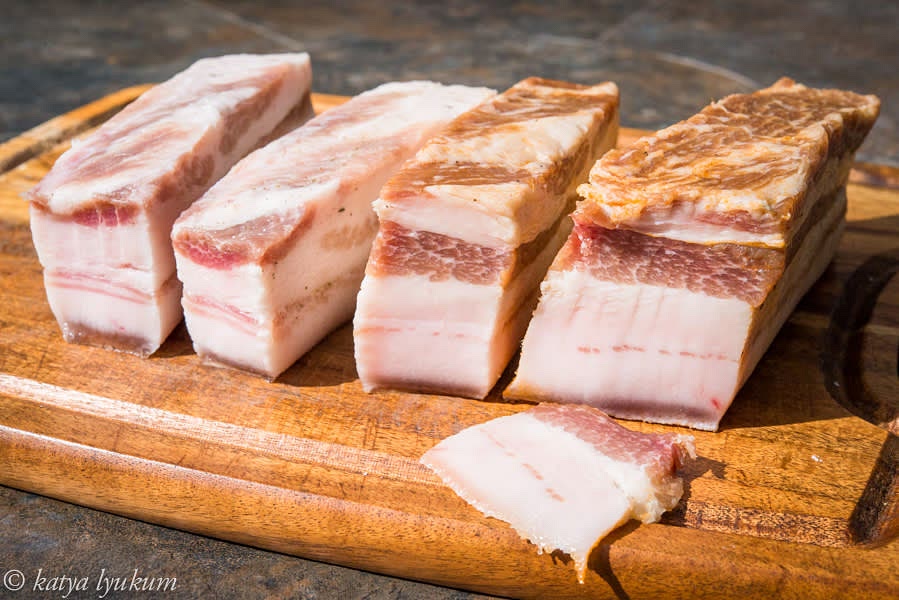
In 2 or 4 days (depends on temperature), wash salt, rub under cold running water, and pat dry salo with paper towels. Transfer salo into dry glass containers covered with cheesecloth or paper towels to mature refrigerated at 34-36F for 1 to 2 weeks. This step aims to slightly air dry it and let salt distribute from the surface inside.
Step 8
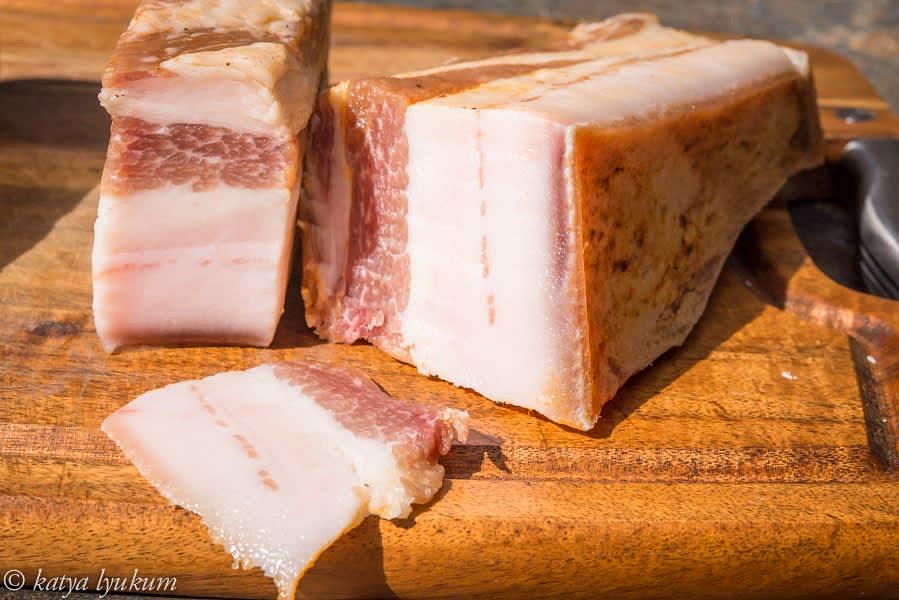
Salo is ready to eat after the first week of maturing. Vacuum pack and freeze for more extended storage.
View on lyukum.com
↑Support creators by visiting their site 😊