
By Ludo Filipe
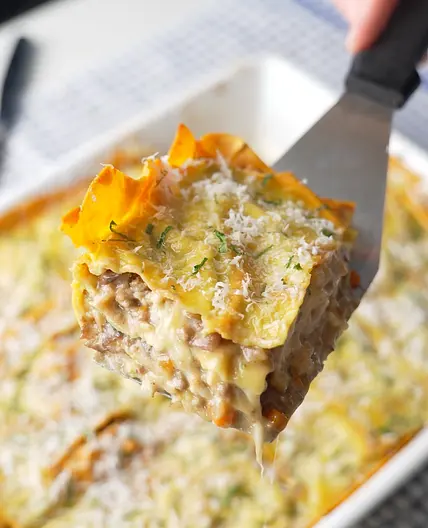
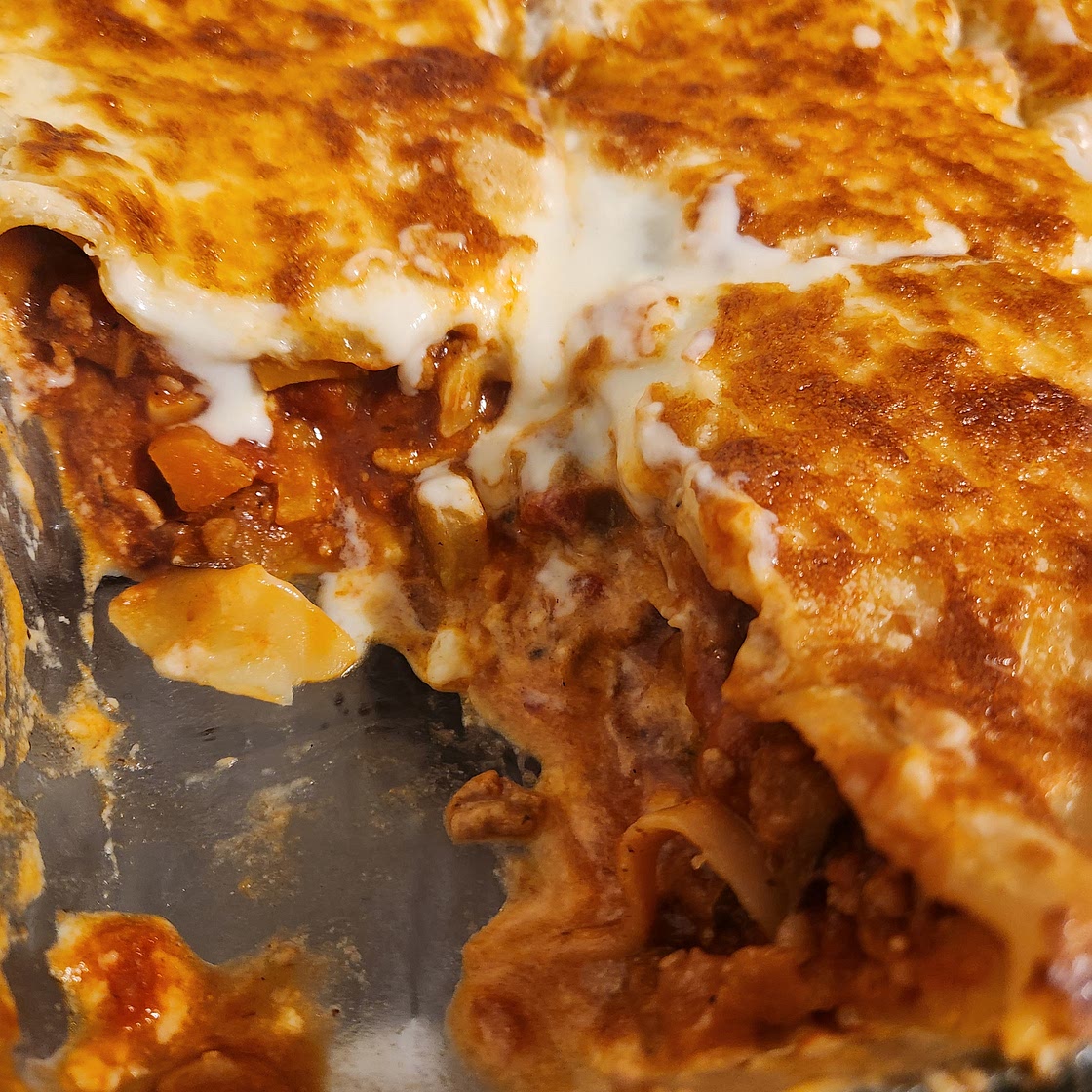
Loaded Beef & Vegetable Lasagne - my version
29 steps
Prep:45minCook:2h 15min
A rich beef‑and‑pancetta ragù with roasted vegetables, silky béchamel, low‑moisture mozzarella and Parmesan. The ragù is deliberately thick so the finished lasagne is juicy but never watery.
Ingredients
Updated at: Wed, 23 Sep 2026 23:03:10 GMT
Nutrition balance score
Unbalanced
Glycemic Index
42
Low
Glycemic Load
12
Moderate
Nutrition per serving
Calories778.2 kcal (39%)
Total Fat48.2 g (69%)
Carbs46.5 g (18%)
Sugars14.2 g (16%)
Protein38.4 g (77%)
Sodium1472 mg (74%)
Fiber4.1 g (15%)
% Daily Values based on a 2,000 calorie diet
Ingredients
8 servings
Roasted vegetables

300gaubergine
medium, cut into 1 cm dice

200gzucchini
medium, courgette, cut into 1 cm dice

150gred bell pepper
large, or yellow, cut into 1 cm dice

1 ½ Tbspextra-virgin olive oil

¼ tspfine salt
not included in the ragù salt

freshly ground black pepper
Beef & pancetta ragù

50gpancetta
very finely diced

500gbeef mince
ideally 15-20% fat
extra-virgin olive oil
only if needed

1onion
large, finely diced

2carrots
medium, finely diced

1celery stalk
finely diced

4garlic cloves
finely minced

1 ½ Tbsptomato purée

60mldry white wine

100mlwhole milk

800gcanned chopped tomatoes
300mltomato passata

150mlbeef stock

1 Tbspdried italian herbs

½ tspred pepper flakes
optional

1 tspsugar
1 ½ tspfine salt
plus more to taste at the end
½ tspfreshly ground black pepper

1bay leaf

15gfresh basil
torn
Béchamel

80gunsalted butter

80gplain flour
900mlwhole milk
warmed
¾ tspfine salt

¼ tspnutmeg
freshly grated

¼ tspwhite pepper
or finely ground black pepper
Assembly


Instructions
Roast the vegetables
Step 1
Heat the oven to 220°C / 200°C fan / 425°F.
Step 2
Put the aubergine, zucchini and pepper on a large baking tray. Toss with 1½ tbsp olive oil, ¼ tsp salt and a little black pepper. Spread in a single layer (use two trays if necessary; crowding causes steaming).
Step 3
Roast for 22–25 minutes, turning once halfway through, until tender, lightly browned at the edges and visibly less wet.Set aside.
Step 4
When the vegetables are done, remove them and reduce the oven to 180°C / 160°C fan / 350°F for baking the lasagna.
Brown the pancetta and beef
Step 5
Heat a large Dutch oven or heavy‑bottomed pot over medium heat.Add the pancetta (no oil). Cook 3–4 minutes, stirring occasionally, until the fat renders and the pancetta begins to brown.
Step 6
Increase the heat to medium‑high. Add the beef. If the pan looks completely dry, add up to 1 tbsp olive oil. Spread the beef out and brown for 6–8 minutes, breaking it up as it cooks. Aim for genuine brown colour on some of the meat, not just grey.
Step 7
Transfer the browned beef and pancetta to a bowl with a slotted spoon. Leave the rendered fat in the pot.
Cook the soffritto
Step 8
Reduce the heat to medium. Add the onion, carrot and celery with a small pinch of the measured salt. Cook for 8–10 minutes, stirring occasionally, until completely softened and beginning to take on colour. Add the garlic and cook for 1 minute.
Step 9
Add the tomato purée and cook for 2 minutes, stirring continuously. The purée should darken slightly and lose its raw smell.
Deglaze with wine
Step 10
Pour in the 60 ml white wine. Scrape the bottom of the pot thoroughly to dissolve the browned meat and vegetable residue. Simmer for 2–3 minutes, until the wine has reduced substantially.
Add the milk before the tomatoes
Step 11
Return the browned beef and pancetta to the pot. Add the 100 ml whole milk. Simmer gently for 2–3 minutes, stirring, until most of the milk has been absorbed/reduced into the meat and soffritto.
Step 12
There should not be a pool of milk remaining. The mixture should look moist and glossy, not dry or stuck to the pot. If it looks too dry, add a tablespoon of stock or water before the tomatoes.
Add the tomatoes and simmer
Step 13
Add the chopped tomatoes, passata, beef stock, sugar, Italian herbs, red pepper flakes, bay leaf, remaining salt and black pepper. Stir thoroughly. Bring to a gentle simmer. Cook uncovered over low heat for 50–60 minutes, stirring every 15 minutes.
Add the roasted vegetables
Step 14
After 30–40 minutes of simmering, add the roasted aubergine, zucchini and pepper so they cook for the final 20 minutes. Fold them gently into the sauce and continue simmering uncovered.
Finish and reduce the ragù
Step 15
After 50–60 minutes total simmer (not counting the initial wine/milk reduction), assess the sauce.
Step 16
It should be thick, rich and spoonable. Drag a spoon through it: the channel should remain visible for a moment before slowly closing. If liquid immediately floods back into the channel, continue simmering uncovered for 10–15 minutes.
Step 17
If the ragù becomes genuinely too dry, add a tablespoon or two of beef stock or water. Remove the bay leaf. Stir in the fresh basil. Taste and adjust salt, pepper and sugar only now. The ragù should be thicker than a normal pasta sauce.
Make the béchamel
Step 18
While the ragù is cooking: Melt the butter over medium heat. Whisk in the flour and cook for 2 minutes, whisking constantly. Do not brown the flour. Gradually add the warm milk, whisking continuously.
Step 19
Once all the milk is incorporated, cook for 6–8 minutes, stirring frequently, until smooth and thick enough to coat the back of a spoon. Run a finger through a little sauce on the back of the spoon; the line should remain visible. Season with salt, nutmeg and pepper.
Step 20
Keep warm. If it becomes excessively thick while waiting, whisk in 1–2 tbsp milk.
Assemble the four‑layer structure
Step 21
Lightly grease the 23 × 33 cm dish with 1 tsp olive oil. Divide the finished ragù into four roughly equal parts. Use one part as a thin base layer to prevent sticking. Use the other three parts for the three internal filling layers (equal amounts per layer).
Step 22
Apply on the top of the thin layer of ragu: your first layer of lasagne sheets, then remaining 1/3 of the ragu and 1/4 of the bechamel and 1/4 of the mozzarella, repeat this sequence twice.
Step 23
Place your last layer of lasagne sheet, remaining 1/4 of bechamel and 1/4 of mozzarella and the parmesan
Step 24
Every sheet should be completely covered with sauce; pay particular attention to edges and corners.
Bake
Step 25
Cover the dish with foil, tented slightly above the cheese so it does not touch the surface. Bake at 180°C / 160°C fan for 30 minutes. Remove the foil. Continue baking for 15–20 minutes, until:
Step 26
the edges are vigorously bubbling the centre is hot, the mozzarella is melted, the Parmesan is deeply golden
Step 27
For an extra‑crisp top, place under the grill/broiler for 1–2 minutes at the end, watching continuously.
Step 28
Remove the lasagna from the oven and leave it uncovered for 20–25 minutes. Do not cut immediately to allow the béchamel, cheese and ragù to settle while keeping the lasagna hot.
Step 29
Finish with fresh basil, cut into 8 portions and serve.
Notes
1 liked
0 disliked
There are no notes yet. Be the first to share your experience!