By Wanderlust Flavors
Sake Steak and Rice
6 steps
Prep:30minCook:45min
Like all old favourites, this changes pretty well every time I cook it. Sometimes I use the sake, both in the marinade and the fluid sauce later; sometimes I use Marsala or sherry. And there is no reason not to use wasabi paste for the English mustard, either. And chicken or duck breasts work in place of the steak, too. For US cup measures, use the toggle at the top of the ingredients list.
Updated at: Thu, 17 Aug 2023 04:59:52 GMT
Nutrition balance score
Unbalanced
Glycemic Index
55
Low
Glycemic Load
38
High
Nutrition per serving
Calories769 kcal (38%)
Total Fat33.1 g (47%)
Carbs69.5 g (27%)
Sugars3 g (3%)
Protein36.1 g (72%)
Sodium1536.7 mg (77%)
Fiber1.2 g (4%)
% Daily Values based on a 2,000 calorie diet
Ingredients
2 servings
For the Steak


For the Marinade

1 teaspoonenglish mustard

2 tablespoonsworcestershire sauce

1 tablespoonsoy sauce

1 tablespoonflavored oil
garlic or chili oil
For the Sauce


Instructions
Step 1
In a freezer bag, combine the marinade ingredients, and add the steaks. Leave to marinate for a few hours or leave in the fridge for up to two days. I nearly always have a bag of marinating meat on the go in my fridge.
Step 2
Let the steaks come to room temperature before you start cooking, and you can put the rice on at the same time. Follow packet instructions for the rice, or rice-cooker handbook or just put the rice in a pan, bruise the cardamom pods and chuck them in too, and put double the volume of water that you have rice. Bring to the boil, then turn down to the lowest you possibly can, clamp on a lid and leave till the rice has absorbed the water and is cooked, about 15 minutes. I never salt the rice here.
Step 3
Heat a ridged griddle and then give the steaks, out of their marinade, 2 minutes a side or so, and remove the steaks, double-wrapping them in foil parcels. Let them rest for 10 minutes on a wooden board or a pile of newspapers.
Step 4
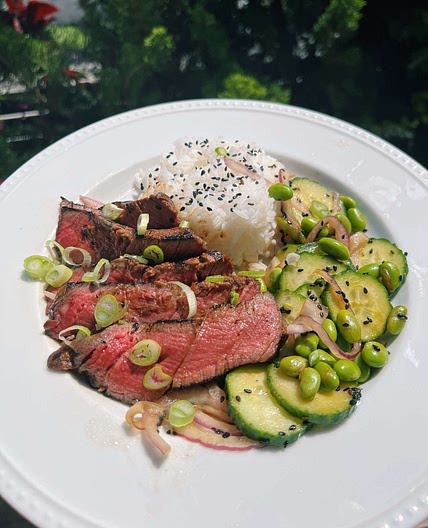
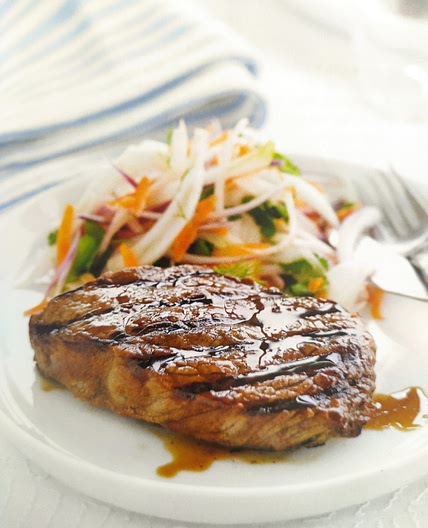
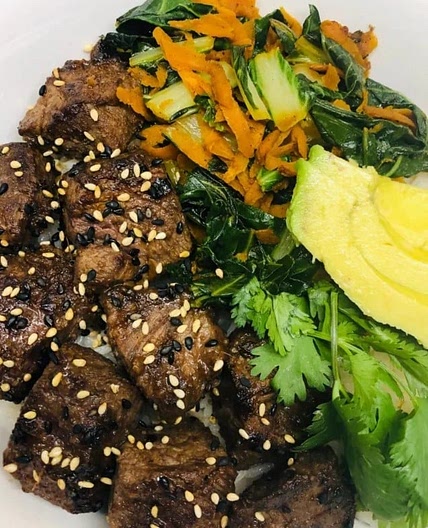
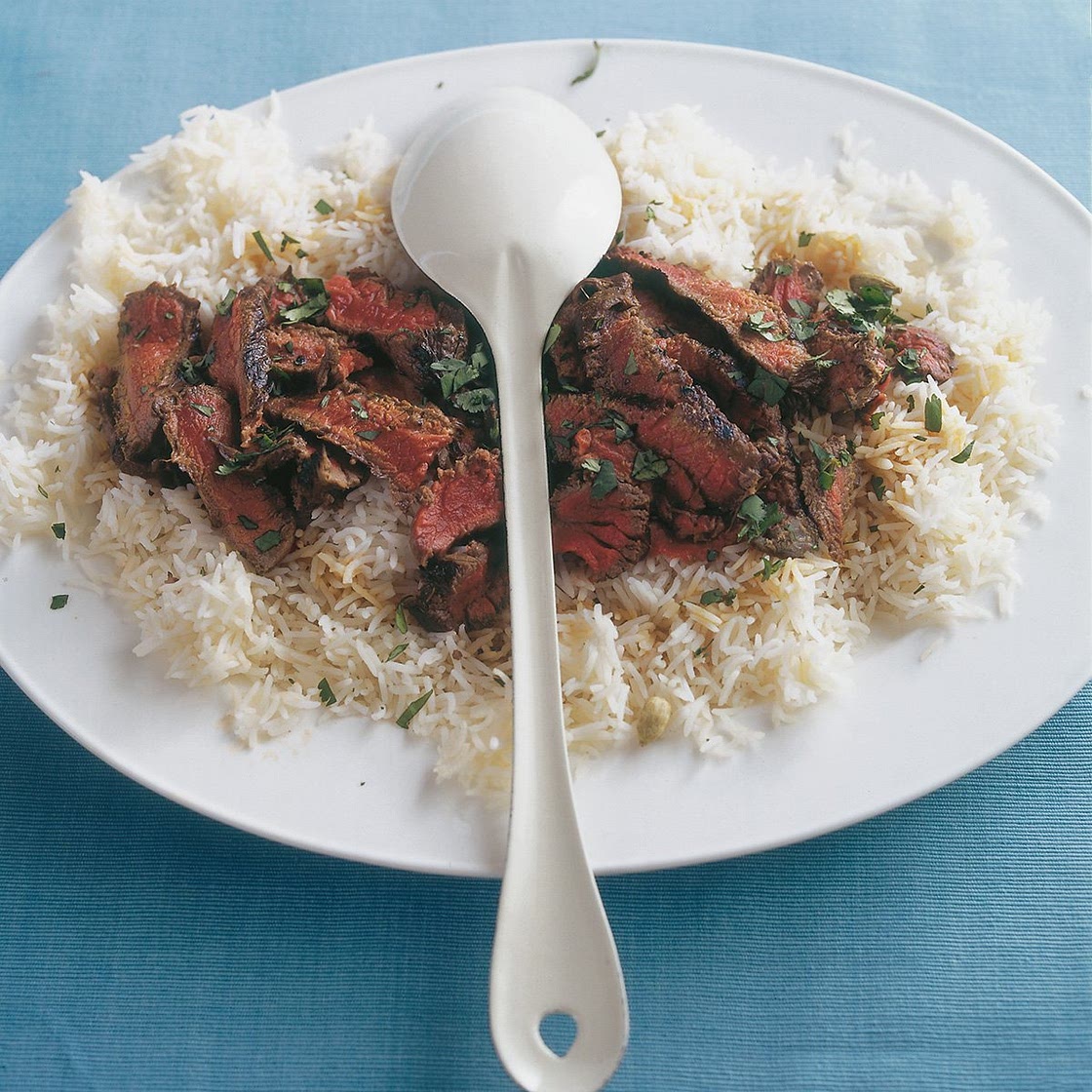
Bring the sake to a boil in a tiny little saucepan, like one you might melt butter in, to let the alcohol taste evaporate. Take the pan off the heat and add the other sauce ingredients. Unwrap the steaks, removing them to a wooden board for carving as you do so, and pour the red juices gathered in the foil parcels into the pan of sauce. Arrange some freshly boiled rice on two plates or one large one, and slice the fillet steaks into thin diagonal slices. Lay the carved steak on top of the rice and spoon over the sauce, letting it gloss the meat and drip here and there over the rice. Scatter the coriander on top.
Step 5
For gluten free: use gluten free Dijon mustard instead of English mustard and tamari instead of soy sauce. Check also that the Worcestershire sauce is suitable as some brands contain malt vinegar (made with barley).
Step 6
The real thing to take from this, too, is the cooking method. This easily translates to bigger cuts as in my quick-cook longrested fillet: when I've got people coming round and I'm not sure exactly when we'll be eating, I cook a large contrefilet or fillet of beef - about 2.25kg / 5lb for eight, or ten if you're a good carver. This is expensive but easy. Heat the oven to gas mark 10/250°C/480°F and sit the naked joint - no fat encasing it and no larding - on a foil-lined tray. Cook the meat for 25 minutes and then take it out, sprinkle with Maldon salt and grind over some pepper and wrap it in the foil it's sitting on to make a tightly-secured but baggy parcel. Now get another piece of foil out and enclose it again. Sit this in a warmish part of the kitchen (i.e., not near an open window), either on a wooden board or on a pile of newspapers (these are insulating as cats and tramps know) for 1 1/2-2 hours.
View on nigella.com
↑Support creators by visiting their site 😊
Notes
0 liked
0 disliked
There are no notes yet. Be the first to share your experience!